
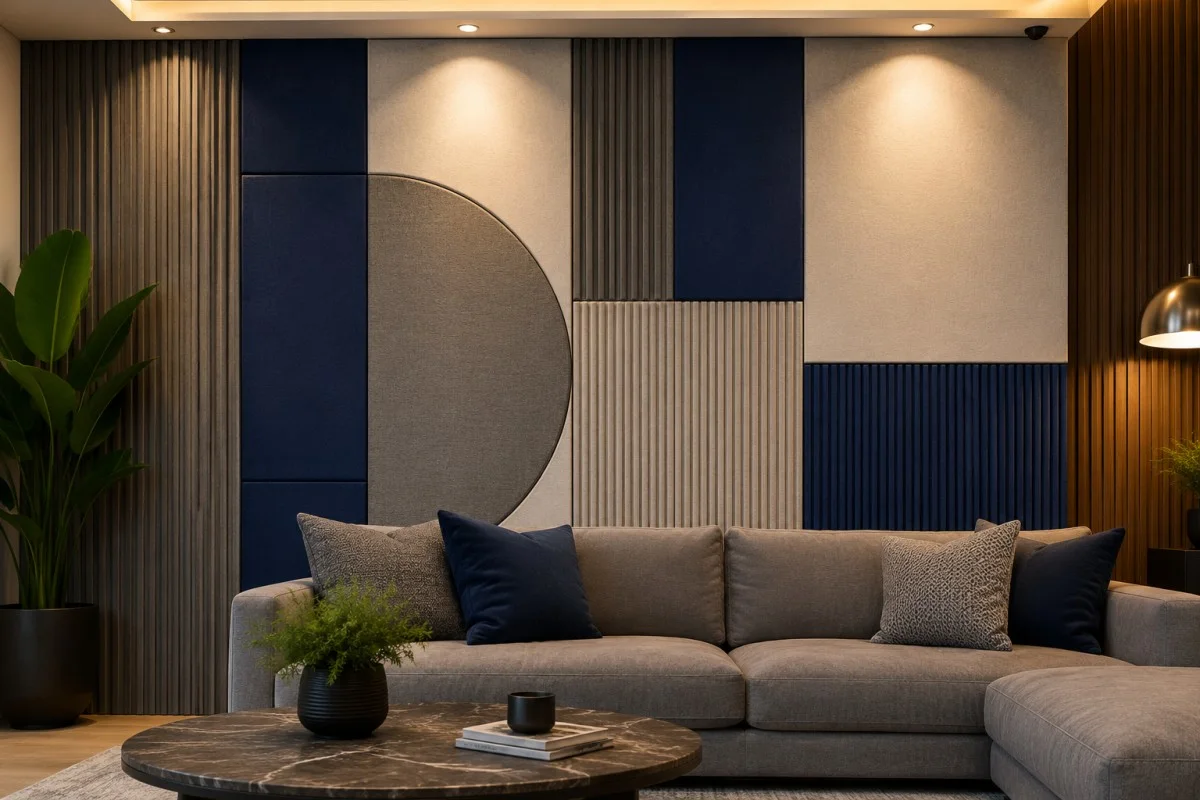
Summary: Decorative Acoustic Wall Panels combine sound absorption with visual design, making them suitable for homes, offices, and commercial interiors. Choosing the right option depends on the acoustic wall panels material, the room’s function, and whether you need absorption or true soundproofing. Buyers researching decorative acoustic wall panels India options should verify NRC ratings and manufacturer credibility before purchase, ensuring both aesthetics and performance are met.
What Are Decorative Acoustic Wall Panels and Why Do They Matter?
Decorative acoustic wall panels are engineered surface treatments that absorb sound reflections while adding texture, colour, or pattern to a wall. Unlike plain foam or fabric baffles, they double as design elements, making them popular in homes, offices, studios, and hospitality spaces. Their core job is to reduce echo and reverberation, improving speech clarity and overall comfort in a room.
Which Acoustic Wall Panels Material Suits Your Space Best?
The acoustic wall panels material you choose determines both performance and appearance. Common options include:
- PET felt panels: lightweight, made from recycled polyester, good for offices and homes.
- Fabric-wrapped fibreglass: strong sound absorption, ideal for auditoriums and studios.
- Wood wool or timber slats: warm aesthetics, suited to lobbies and living rooms.
- Foam composites: budget-friendly, best for smaller rooms with moderate noise issues.
Match the material to the room’s function. A home study needs light absorption, while a music room or conference hall demands higher sound absorption ratings.
How Do You Choose Decorative Acoustic Wall Panels India Buyers Trust?
When searching for decorative acoustic wall panels India wide, climate and durability matter as much as design. Look for panels that resist humidity, are fire-rated where required, and come with proper installation support. Buyers should also check certifications, real project references, and whether the panels are tested for sound absorption rather than just marketed as acoustic. Price transparency and after-sales guidance are equally important when comparing local suppliers.
Are Decorative Soundproofing Panels Different from Acoustic Panels?
This is one of the most common points of confusion. Decorative soundproofing panels aim to block sound from passing between rooms, while acoustic panels absorb sound within a room to reduce echo. Most residential and commercial spaces actually need acoustic absorption, not full soundproofing. Understanding this difference early prevents overspending on the wrong solution.
What Should You Look for in Acoustical Wall Panelling Manufacturers?
Not all acoustical wall panelling manufacturers offer the same quality or testing standards. Before finalising a supplier, check for:
- Documented Noise Reduction Coefficient (NRC) ratings for each product line
- Availability of custom sizes, colours, and finishes
- Fire safety and environmental compliance
- Installation guidance and warranty terms
A credible manufacturer will share test data rather than vague performance claims. The Noise Reduction Coefficient itself is a standardised rating derived from reverberation-room testing under ASTM C423, and understanding it helps you compare panels objectively rather than relying on marketing language. You can read a neutral technical breakdown of this standard on Wikipedia’s Noise Reduction Coefficient page.
How to Match Decorative & Acoustical Wall Panels with Your Interior Style?
Decorative & acoustical wall panels now come in geometric cuts, 3D textures, printed graphics, and natural finishes. For minimalist interiors, choose neutral-toned felt panels with clean lines. For warmer spaces, timber slat or wood wool panels add depth. Bold offices or studios can use printed or coloured panels as a feature wall while still gaining acoustic benefits. At us, this balance of form and function is the starting point for most panel recommendations, since a panel should never compromise either goal.
Conclusion
Selecting the right decorative acoustic wall panels comes down to three factors: the material’s acoustic performance, its visual fit with your space, and the credibility of the manufacturer behind it. Whether you are furnishing a home, office, or commercial venue, prioritising tested NRC ratings alongside design intent will save cost and disappointment later.
Frequently Asked Questions:
Do decorative acoustic panels actually reduce noise, or are they just for looks?
Yes, genuine acoustic panels absorb sound energy and measurably reduce echo, though their effectiveness depends on the material, thickness, and NRC rating.
What is the difference between acoustic panels and soundproofing panels?
Acoustic panels absorb sound inside a room to cut echo, while soundproofing panels are built to block sound from moving between spaces.
Can I install decorative acoustic panels in a home without professional help?
Many lightweight PET or foam panels use adhesive or click systems suitable for DIY, but heavier fibreglass or timber panels usually need professional mounting.
How many acoustic panels does a room typically need?
Most experts recommend covering 15 to 30 percent of wall surface area, depending on room size, ceiling height, and existing hard surfaces.
Are acoustic wall panels good for humid climates like coastal India?
Not all materials handle humidity well, so PET felt or treated fibreglass panels are generally preferred over untreated foam in humid regions.
