Call ✆ +91 9809802016 | 9891320678

Quick Answer: Acoustic panels are sound absorbing boards fitted on walls or ceilings that reduce echo, reverberation and background noise inside a room. They are made for offices, studios, auditoriums, restaurants, home theatres and residential rooms, and are installed by manufacturers like Packsound with tested NRC ratings and fire compliance. This page covers material types, specifications, installation, cost logic, and the myths that cause most buyers to pick the wrong panel.

Acoustic panels are engineered sound absorbing panels, usually built from fabric, PET felt, wood, or foam over a mineral wool or polyester core, that soak up sound energy inside a room instead of letting it bounce off hard ceilings and walls. If your office feels loud even when only three people are talking, if a home theatre sounds boomy, or if a restaurant is too noisy to hold a conversation at dinner rush, that is reflected sound, not outside noise, and acoustic panels are the correct fix. This page is written for facility managers, architects, interior designers, studio owners, and homeowners in India who are deciding between panel types, checking NRC ratings, or comparing acoustic panels vs soundproof panels before a purchase.
Most buyers searching for acoustic panels actually have one of two separate problems: too much echo inside a room, or too much noise leaking in from outside. Acoustic panels solve the first problem by absorbing sound waves after they are already inside the space. They do not stop traffic noise, a neighbour’s music, or machine sound from entering through a wall, that job belongs to mass loaded vinyl, double drywall, or soundproof partitions. Confusing the two is the single biggest reason installations fail to meet expectations, so before you buy, define whether you need acoustic treatment (better sound inside the room) or soundproofing (blocking sound from crossing the wall).
Explore our range of acoustic panels designed for studios, offices, auditoriums, and home theatres.
Sound waves hit the panel face, pass through the porous or perforated surface, and lose energy as they travel through the fibrous core before a small portion reflects back. The physics is simple, the sizing is where most projects go wrong:
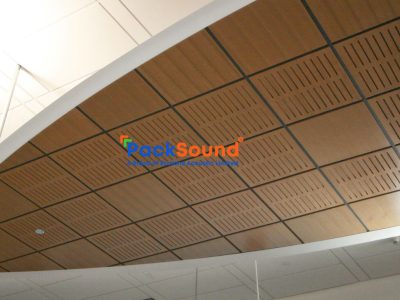
Both use the same absorption principle, but placement changes the outcome. Acoustic wall panels are placed at ear height and at first-reflection points to cut speech echo and improve intelligibility in meeting rooms and studios. Acoustic panels for ceiling, also called ceiling acoustic treatment, address reverberation from above, which matters most in double-height lobbies, auditoriums, and open offices with hard slab ceilings. In most commercial fit-outs we design, ceiling acoustic panels go in first because ceilings are usually the largest untreated hard surface in the room, then wall panels fill the gaps at first-reflection points.
| Material | Common Name | NRC Range | Best Use Case |
|---|---|---|---|
| Fabric Wrapped | Acoustic fabric panels | 0.85 - 0.95 | Offices, homes, boardrooms |
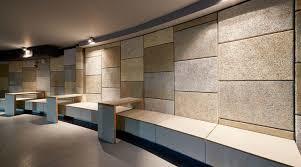
| Wood Wool / Slats | Acoustic wood panels | 0.70 - 0.85 | Auditoriums, boardrooms |
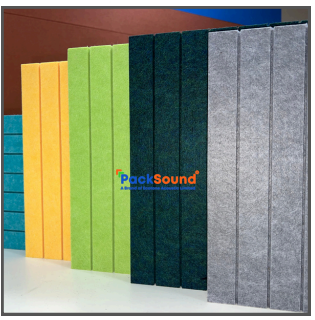
| PET Felt | Acoustic PET panels (polyester fibre) | 0.75 - 0.90 | Eco-conscious offices, schools |
| Foam | Acoustic foam panels | 0.65 - 0.80 | Studios, budget projects |
| Mineral Fibre / Fiberglass | Sound absorbing panels | 0.80 - 0.95 | Auditoriums, large halls |
A note on acoustic panel design from site experience: designers often pick a panel for its finish first and its NRC second. That order should flip for any room where speech clarity is the actual goal, a beautiful wood-slat panel with poor core density will look right and perform wrong.
Auditoriums combine two problems at once, long reverberation time from a large air volume and uneven sound distribution from a fixed seating layout. Acoustic treatment for auditorium projects typically mixes wood wool or mineral fibre wall panels with hanging ceiling baffles, because a flat ceiling panel alone cannot control reverberation across a room that size. This is also where the acoustic wall panels material choice affects fire compliance the most, auditoriums in India generally require Class A or Class 1 fire-rated cores under local building norms, so always ask for the fire test certificate, not just the NRC number.
| Myth | Reality |
|---|---|
| Acoustic panels block outside noise | They reduce echo, not sound entering through walls. |
| More panels always means less noise | Coverage ratio matters more than panel count. |
| Thin foam panels work everywhere | Thickness must match the frequency range needed. |
| All acoustic panels are fire safe | Fire rating varies by core, always check the certificate. |
| Soundproof acoustic panels stop bass fully | Bass needs mass and sealed cavities, not panels alone. |
| DIY installation performs like professional fitting | Gaps and wrong spacing cut real-world NRC sharply. |
| Specification | Detail |
|---|---|
| Thickness | 12mm to 50mm |
| Panel Sizes | 600x600mm, 600x1200mm, 1200x2400mm |
| NRC Rating | 0.65 to 0.95 depending on material |
| Fire Rating | Class B to Class A / Class 1 available |
| Core Material | Mineral wool, PET fibre, polyester, foam |
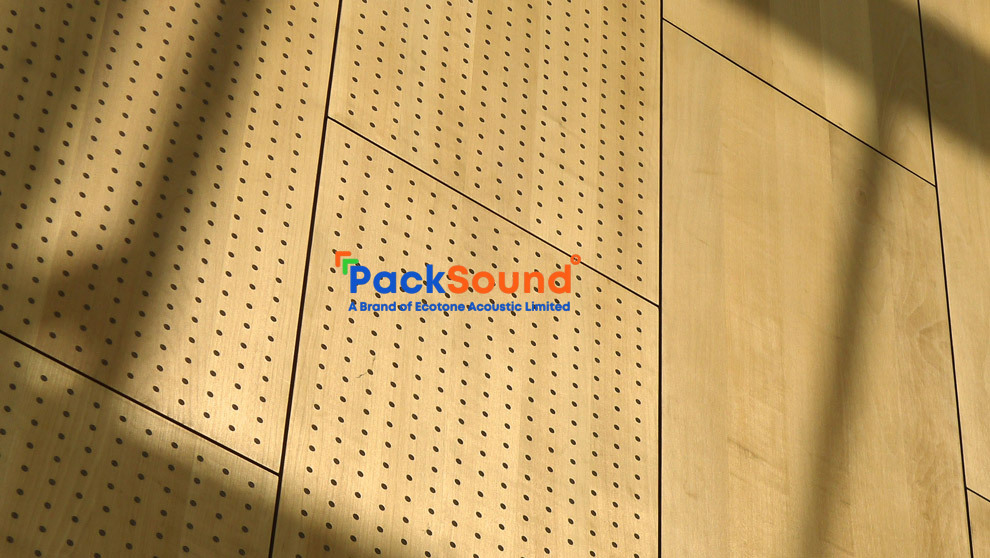
| Facing | Fabric, wood veneer, perforated MDF, foam |
| Mounting | Adhesive, Z-clip, or track-mounted |
| Benefit | Description |
|---|---|
| 🔇 Echo Reduction | Cuts echo and reverberation for clearer speech |
| 🎯 Better Focus | Improves focus in open offices and call centres |
| 🎙️ Studio Accuracy | Enhances recording and mixing accuracy in studios |
| 🏫 Reduced Fatigue | Reduces listener fatigue in classrooms and auditoriums |
| 🔥 Fire & Eco Options | Available in fire-rated, eco-friendly PET options |
| 🎨 Custom Finishes | Custom finishes match interior design intent |
| 🛠️ Long Service Life | Long service life with minimal maintenance |
| Application Area | Typical Use |
|---|---|
| 🏢Corporate Offices | Open workstations and office environments |
| 🎬Home Theatres | Residential media rooms and entertainment spaces |
| 🎙️Recording Studios | Recording studios and podcast rooms |
| 🎓Educational & Event Spaces | Auditoriums, seminar halls, and classrooms |
| ☕Hospitality | Restaurants, cafes, and hospitality lobbies |
| 🏥Healthcare | Hospitals and diagnostic centres |
| 📡Broadcast & Conference | Broadcast rooms and conference facilities |
| Step | Acoustic Installation Process |
|---|---|
| 01 | Site acoustic survey and reverberation check |
| 02 | Material and NRC selection based on room use |
| 03 | Coverage and first-reflection point mapping |
| 04 | Surface preparation and layout marking |
| 05 | Panel mounting via adhesive, clip, or track |
| 06 | Seam and edge finishing for a flush look |
| 07 | Post-install sound check against target NRC |
| Parameter | Value |
|---|---|
| Product Category | Acoustic panels for walls and ceilings |
| Core Options | Mineral wool, PET felt, polyester fibre, foam, wood wool |
| NRC Range | 0.65 - 0.95 (material dependent) |
| Standard Thickness | 12mm, 25mm, 35mm, 50mm |
| Standard Panel Sizes | 600x600mm, 600x1200mm, 1200x2400mm |
| Fire Performance | Class B (standard) to Class A / Class 1 (auditorium grade) |
| Density | 40-120 kg/m³ depending on core |
| Test Standard Referenced | ASTM C423 (Sound Absorption, Reverberation Room Method) |
| Finish Options | Fabric wrap, wood veneer, perforated MDF, matte foam |
| Recommended Coverage | 30-40% of wall/ceiling area for speech clarity |
| Warranty | Manufacturer-backed, project dependent |
No, they reduce echo inside a room. Blocking outside noise needs soundproofing, not acoustic panels.
Acoustic panels absorb sound inside a room; soundproof panels block sound from passing through walls.
Cover 30-40% of wall and ceiling area for good speech clarity in most rooms.
Yes, foam panels for walls suit small budget studios, though NRC is lower than fabric or mineral wool.
Yes, ceilings are often the largest untreated hard surface causing reverberation in a room.
An NRC of 0.80 or higher is considered strong for offices and meeting rooms.
Yes, but incorrect spacing and mounting can cut real-world absorption significantly below rated NRC.
Wood panels suit durability and auditorium finishes; fabric panels usually give a higher NRC.
Packsound manufactures and ships acoustic panels india-wide, with local installation teams in major cities.
Reducing echo and background noise can make a room feel calmer for noise-sensitive individuals.