Call ✆ +91 9809802016 | 9891320678

A metallic noise barrier is a steel or aluminium acoustic panel system used to block, absorb, or deflect sound from highways, railways, metro corridors, and industrial plants. A qualified metallic noise barrier manufacturer in India designs these systems to IRC SP 90:2010 noise abatement guidelines and CPCB ambient noise limits, typically delivering 10 to 25 dB(A) of insertion loss depending on height, density, and panel composition. This page is built for project engineers, EPC contractors, NHAI/metro consultants, facility managers, and procurement teams evaluating a noise barrier manufacturer for highway, railway, metro, or industrial noise control projects in India.
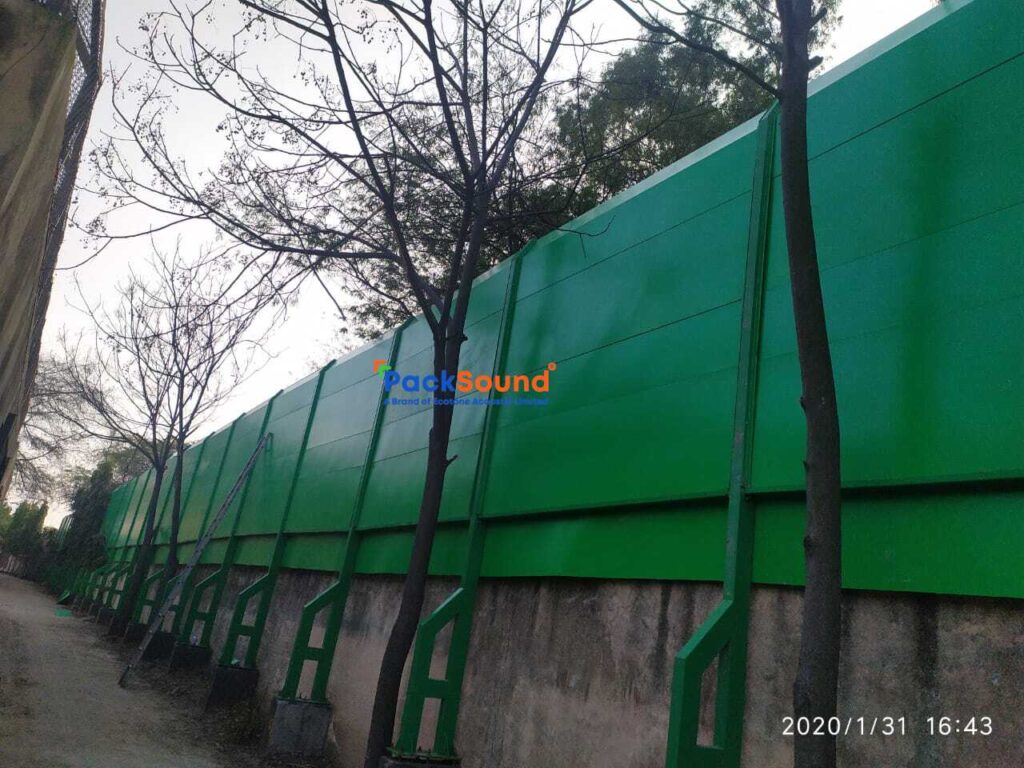
A metallic noise barrier is an engineered acoustic wall, usually made from galvanized steel or aluminium panels filled with a mineral wool or rockwool absorptive core, installed along the line of sight between a noise source (traffic, trains, or machinery) and a noise-sensitive receiver (homes, hospitals, schools).
The barrier works on two physical principles at once: the metal skin reflects and blocks airborne sound, and the perforated inner face lets sound enter a cavity where the absorptive core converts sound energy into heat, reducing reflected noise back toward the source.
This dual-action design is why metallic systems outperform simple mass-only walls in high-traffic highway and railway corridors.
| Industry | Industry Context | Primary Decision Driver |
|---|---|---|
| NHAI / State Highway Authorities | Highway noise barrier, road noise barrier projects | IRC SP 90:2010 compliance, L-DWL reduction target |
| Metro Rail Corporations | Metro noise barrier, metro corridor noise barrier | Elevated viaduct wayside noise, resident complaints |
| Railway Divisions | Railway noise barrier near residential stretches | Night-time Leq compliance near colonies |
| Factory / Plant EHS Teams | Industrial noise barrier manufacturer requirement | CPCB industrial zone limit (75/70 dB day/night) |
| EPC Contractors, Consultants | Outdoor sound barrier specification in tenders | Verified TDS, insertion loss test data |
| Specification | Detail |
|---|---|
| Panel material | Galvanized steel / aluminium, 0.5 to 1.2 mm skin |
| Core infill | Mineral wool / rockwool, 48 to 96 kg/m³ density |
| Panel thickness | 50 mm to 150 mm |
| Standard height range | 1.5 m to 6 m (site-dependent) |
| Fire rating | Non-combustible core, Class A1 where specified |
| Finish | Pre-coated, powder-coated, or weather-primed |
| Design life | 25+ years outdoor exposure |