
Acoustic Foam Panels: Pyramid Foam & Wedge Foam in India
Quick Answer: Acoustic foam panels are soft, open cell panels that absorb echo and reverberation inside a room. PackSound makes flat panels, pyramid foam and wedge foam in India in fire retardant grades for offices, meeting rooms, call centres, training rooms and commercial studios. Foam improves sound inside a room; to stop noise passing through walls, pair it with mass loaded vinyl.
Our foam comes in a range of thicknesses and profiles, so you can pick lighter panels for a podcast room or deeper wedges and pyramids for a mixing studio. The panels are made from fire retardant foam and can be fixed with adhesive or mounted on boards. For the best result, start with the first reflection points beside and behind the listening position, then add corner bass traps and ceiling panels as needed. Many customers combine foam with our PACKSOUND mass loaded vinyl, using foam for clarity inside the room and the vinyl sheet to block noise from outside. We supply across India; send us your room size and we will suggest the right quantity and layout.

Delivered across India
Acoustic experience
Survey, supply & install
PackSound Acoustic Foam Products

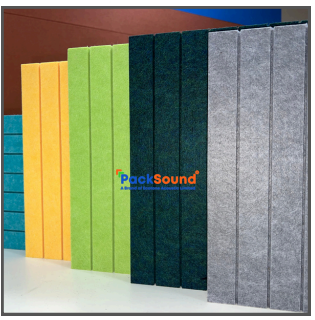
Features :-
Creating a clear, controlled, and comfortable sound environment is no longer a luxury—it’s a necessity. Whether you’re designing a recording studio, home theater, office meeting room, podcast setup, or classroom, the right acoustic foam can dramatically improve sound quality and reduce unwanted noise.
At PackSound, we manufacture premium-grade acoustic foam, engineered specifically for Indian environments and soundproofing needs. Our products combine professional performance, durable materials, scientifically designed shapes, and industry-leading NRC ratings that ensure echo reduction, noise control, and better sound clarity.
This comprehensive guide will help you understand everything about acoustic foam, how it works, where it’s used, and why PackSound is one of India’s top choices across industries.
Our Soundproof Panels Have
- Effective Sound Absorption
- Customizability
- Easy Installation
Why Acoustic Foam Matters Today
Noise inside commercial spaces has grown with modern design and ways of working:
- Open plan offices with hard floors and glass partitions
- Meeting rooms used all day for video calls
- Busy call centres and customer service floors
- Exposed ceilings and concrete finishes
- More audio and video equipment in training and conference rooms
Much of this is reflected sound bouncing around the room, not noise coming from outside. This is where acoustic foam panels help. They absorb reflections, control echo and make speech clearer for staff, clients and callers.
TECHNICAL BENEFITS OF ACOUSTIC FOAM PANELS
PACKSOUND Foam Panels are processed using High GSM Non-Woven Fire Retardant Fabric, having the ability to sustain a temperature range of -40 Degrees Celsius to 160 Degrees Celsius for up to 2 hours, laminated through high-quality glue to flexible foam on the front side. The foam used is Acoustic Open Cell Foam, having Fire Retardant properties and passing UL-94 FR standards. On the Back Side, this foam is laminated through glue with Release paper, making it a ready-to-use product offering high acoustic properties.
Panel Configuration:-
Front Side: Non-Woven FR Fabric
Middle Padding: Fire Retardant Foam
Back Side: Adhesion through a Self-Release Paper
Difference Between Acoustic Foam and Soundproofing Sheets
Many people confuse acoustic foam with soundproofing sheets, but their purposes are different:
| Feature | Acoustic Foam | Soundproof Sheets |
|---|---|---|
| Main Purpose | Absorb sound inside a room | Block or reduce sound between rooms |
| Best For | Echo, reflection & reverberation control | Noise blocking from external sources |
| Material | Porous acoustic foam | Dense blankets or layered composites |
| Installation | Walls, ceiling, corners | Walls, doors, floors |
For an optimal acoustic environment, many professionals use both solutions: foam for sound clarity and sheets for external noise control.
How Acoustic Foam Works
Sound waves bounce off hard surfaces, creating echoes and unwanted reflections. Acoustic foam is structured with open-cell patterns and soft materials that trap and dissipate these waves. The result is reduced reverberation, balanced frequencies, and clearer audio.
It’s important to note that while acoustic foam panels improve internal acoustics, they do not provide complete sound isolation. For reducing noise transfer between rooms, pairing foam with soundproofing foam for walls or soundproof sheets is recommended.
Types of Acoustic Foam Panels
Studio Acoustic Foam Panels
Studio acoustic foam panels go on the first reflection points, behind the mixing desk and around vocal booths. They remove flutter echo and make recordings sound tighter and more controlled.
Wedge Acoustic Foam
Wedge acoustic foam has rows of angled ridges that add surface area and soak up mid and high frequencies well. It is the most common pick for podcast rooms, voice-over booths and home studios.
Pyramid Acoustic Foam
Pyramid acoustic foam uses a grid of small pyramids, so it absorbs sound evenly from many directions. It works well on ceilings and on the walls facing the speakers in a home theatre.
Noise Reduction Foam Panels
Noise reduction foam panels lower echo and the overall noise level in offices, classrooms and meeting rooms, which makes speech easier to follow. Remember that foam reduces noise inside a room; it does not stop sound passing through a wall.
Soundproofing Foam Sheets
Soundproofing foam sheets are larger sheets or rolls used to line walls, doors and machine enclosures. To actually block sound, pair them with a dense layer such as PACKSOUND mass loaded vinyl.
Pyramid Foam in India
Pyramid foam has a surface of small four-sided pyramids. The shape gives the foam more surface area than a flat sheet and absorbs sound arriving from many directions, with a little scattering that keeps the room from sounding dead. It gives an even, balanced result, which is why it is a popular choice for professional rooms.
As a supplier of pyramid foam in India, PackSound offers fire retardant grades in standard 600 x 600 mm panels and custom sizes. Typical commercial uses include:
- Conference and boardroom walls facing the screen
- Training rooms and corporate studios
- Ceilings above meeting tables
- AV control rooms and broadcast booths
Wedge Foam in India
Wedge foam has rows of angled ridges. The wedges absorb mid and high frequencies strongly and work best when the ridges face the incoming sound. It is the classic studio profile, and it suits rooms where strong echo control is needed.
We supply wedge foam in India in fire retardant grades and several thicknesses for:
- Recording, podcast and broadcast rooms in offices and media houses
- Call centre walls around agent clusters
- Server and equipment rooms
- Lining of DG and compressor canopies where foam is permitted
Pyramid Foam vs Wedge Foam
| Point | Pyramid foam | Wedge foam |
|---|---|---|
| Shape | Grid of small pyramids | Parallel angled ridges |
| Absorption | Even, from many angles | Strong mid and high absorption |
| Sound character | Balanced, slight scattering | Very controlled, drier room |
| Best placement | Walls and ceilings in meeting and training rooms | Walls facing the sound source in studios and call centres |
| Look | Textured, modern | Classic studio |
Both are available in the same thicknesses and fire grades. Many rooms combine them: pyramid foam on ceilings and wedge foam on the main walls.
Acoustic Foam Panel Specifications
| Parameter | Detail |
|---|---|
| Material | Open-cell polyurethane or melamine foam |
| Profiles | Flat, pyramid, wedge, egg crate, bass trap corner |
| Thickness | 25, 50, 75 and 100 mm |
| NRC | About 0.55 (25 mm) to 0.95 (100 mm) |
| Fire rating | Class B fire retardant; Class A available in melamine |
| Panel size | 600 x 600 mm standard; custom sizes available |
| Colours | Charcoal, black, grey, off-white and custom |
| Installation | Adhesive on walls and ceilings, or on boards for removable fitting |
How Much Foam Does a Commercial Room Need?
| Space | Suggested coverage |
|---|---|
| Corporate meeting rooms | 25 to 35 percent of walls |
| Training rooms and classrooms | 20 to 30 percent of rear and side walls |
| Server and equipment rooms | 40 percent or more |
| Recording and broadcast studios | 40 to 60 percent of walls, plus ceiling reflection points |
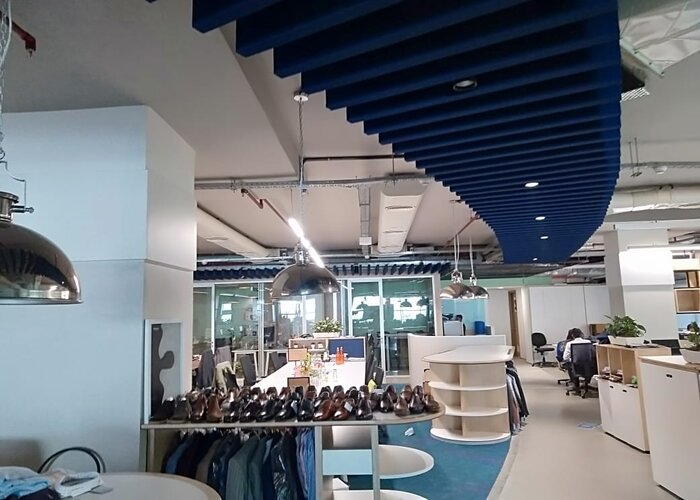
Start with the surfaces closest to the people speaking. For rooms with high ceilings, baffle ceilings can work alongside wall foam. For help with layout, talk to our acoustic consultants.
Placement Tips for Maximum Acoustic Performance
Correct placement is crucial for achieving optimal results:
First Reflection Points
Identify where sound first hits your walls from speakers or microphones. Placing foam here reduces harsh reflections and improves clarity. A simple mirror technique can help determine these points.
Corners and Ceilings
Low frequencies accumulate in corners. Installing thicker panels or specialized bass traps in corners smooths out these frequencies. Ceilings also benefit from treatment, especially in rooms with high ceilings.
Recording Area
Surrounding your microphone or instrument with acoustic foam minimizes echo and captures cleaner sound. Strategic placement around the recording area ensures professional-quality results.
Listening Position
Treating the area behind the listener controls rear reflections and delivers a more accurate sound field, essential for music mixing, streaming, or critical listening.
Combining Acoustic Foam with Other Treatments
For the best acoustic performance, many professionals combine foam with other treatments:
Acoustic Foam + Soundproofing Sheets: Foam for internal absorption, sheets to block external noise.
Foam + Bass Traps: Smooth out low-frequency accumulation in corners.
Foam + Heavy Curtains: Further reduces reflections and controls room tone.
This combination ensures optimal sound for recording, streaming, or listening.
Why PackSound is the Best Choice
PackSound stands out as a leader in acoustic solutions. Our products combine performance, affordability, and convenience, ensuring that every customer achieves professional results.
Key Advantages:
High-quality, durable acoustic foam
Multiple thickness and panel options
Expert guidance for placement
Nationwide support and delivery
Competitive acoustic foam pricing
Whether you are a beginner or professional, PackSound makes it easy to optimize any space for sound.
Final Thoughts
Creating a professional acoustic environment requires careful selection and placement of materials. PackSound acoustic foam and soundproofing products offer a complete solution for echo reduction, sound clarity, and noise control.
From searching for “acoustic foam near me” to installing professional-grade acoustic foam panels, PackSound is your trusted partner. Explore our products today and transform your space into a high-performance acoustic environment that generates better recordings, more productive workspaces, and a superior listening experience.
Frequently Asked Questions
Yes, for the job they are made for. Acoustic foam panels absorb sound inside a room, which cuts echo and reverberation and makes speech clearer. They do not stop sound passing through walls; for that you need soundproofing such as mass loaded vinyl.
Not on their own. Foam improves the acoustics inside a room but does not block noise between rooms. For soundproofing, use a sealed wall build-up with mass loaded vinyl, and add foam to control echo inside the room.
The purpose of acoustic foam panels is to improve the sound quality and acoustics within a room by reducing sound reflections, echoes, and reverberations. These specialized panels are designed to absorb sound waves, converting them into heat energy through friction and vibration within the foam’s structure.
Pyramid foam is used on walls and ceilings of meeting rooms, training rooms and studios to absorb echo evenly from many directions.
Neither is better everywhere. Pyramid foam gives a balanced sound; wedge foam gives stronger, more controlled absorption. Many rooms use both.
Use only fire retardant foam in commercial buildings and ask for the fire test report. Melamine foam offers a higher fire rating where norms are strict.
For most offices and meeting rooms, 50 mm foam gives a good balance of absorption and cost. Use 75 to 100 mm in studios or rooms with more low frequency noise.
Foam is not usually stuck directly on glass. Treat the solid walls and ceiling instead, or use framed panels near the glass so the partition stays clear.
Yes. Foam on walls and ceilings around agent clusters lowers background chatter, so agents and customers hear each other more clearly.
Use a soft brush or a vacuum with a brush attachment on low suction. Avoid water and chemical cleaners on the foam surface.
Yes. We supply fire retardant pyramid foam, wedge foam and flat panels across India, with installation for commercial projects.
Related Products

Acoustic Panels
View product →
Sound Absorbing Materials
View product →
Sound Dampening Panels
View product →
Metal Acoustic Panels
View product →
Baffle Ceiling
View product →

Sleek Acoustic Ceiling Panels
View product →
Talk to our acoustic engineers for a free site assessment.