
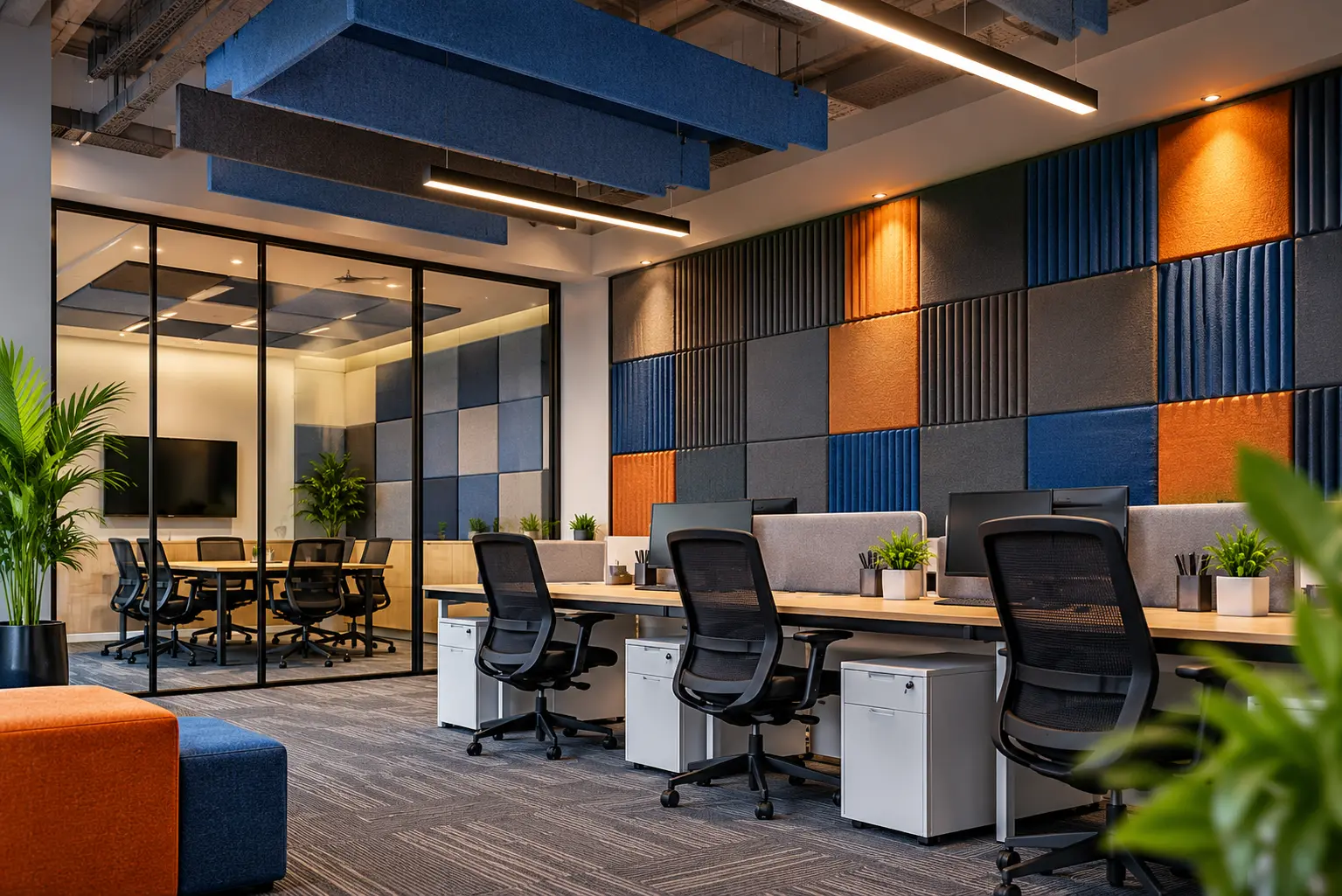
Walk into a busy office, a new restaurant or a glass-walled conference room and you can usually hear the problem before you see it. Voices bounce off hard floors, glass and gypsum. People raise their voices to be heard, which makes the room louder still. Calls drop in quality, customers leave sooner and staff go home tired.
Most of the time the fix is not a bigger wall. It is controlling the sound that is already inside the room. That is the job acoustic foam does, and when it is chosen and placed properly it is one of the most cost-effective upgrades a commercial space can make.
This guide is written for facility managers, architects, interior designers and business owners in India who are planning acoustic treatment for offices, hospitality, education, healthcare and event spaces. We have kept it practical: what foam can and cannot do, which type suits which room, how much you need and what to check before you buy.
What acoustic foam actually does (and what it does not)
Acoustic foam is an open-cell material. Sound waves enter the tiny connected pores, lose energy as friction and come out much weaker, or not at all. The result is less echo, shorter reverberation and clearer speech inside the room.
Here is the part many suppliers skip. Acoustic foam absorbs sound. It does not block it. Foam on a wall will make a meeting room sound calmer and more private for the people inside, but it will not stop traffic noise from the road or a loud discussion from leaking into the next cabin.
Blocking sound between spaces needs mass and airtight construction. That means dense layers such as soundproof sheets or mass loaded vinyl inside the partition, sealed gaps and properly rated doors like our acoustic wooden doors. In most commercial projects the best result comes from using both: blocking materials in the walls and foam or panels on the surfaces.
Does acoustic foam reduce outside noise?
Only slightly. It can take the edge off reflected noise once it is inside the room, but it will not stop it from coming in. If outside noise is your main complaint, start with windows, door seals and wall build-up, then treat the room surfaces.
Where acoustic foam makes the biggest difference in commercial spaces
Offices and open workspaces
Open plan floors are full of hard surfaces and constant conversation. Foam panels on columns, side walls and above workstations cut down the background buzz that makes it hard to focus. For phone calls and quick meetings, many companies now add office and meeting pods alongside wall treatment.
Conference rooms and boardrooms
Glass walls, large tables and video calls are a difficult mix. Echo makes microphones pick up the room instead of the speaker. Treating the rear wall and at least one side wall usually improves call clarity straight away. In premium boardrooms, foam is often hidden behind fabric or combined with decorative acoustic panels so the room still looks finished.
Restaurants, cafes and banquet halls
A lively room is good for business. A room where guests have to shout is not. Foam or fabric-faced panels on ceilings and upper walls bring the noise level down without changing the mood. For high ceilings, a baffle ceiling hung above the dining area works well and doubles as a design feature.
Auditoriums, training rooms and classrooms
In spaces where people listen to one speaker, clarity matters more than anything. Foam is useful in control rooms, rear walls and side panels, while the main hall usually needs a full design that also covers seating, ceilings and stage finishes. Our auditorium seating and interior teams work on these together.
Hospitals, clinics and call centres
Patient privacy and staff concentration both suffer in echoey rooms. Washable, fabric-faced foam panels in consultation rooms, waiting areas and call centre floors reduce stress and make conversations easier to follow.
Types of acoustic foam used in commercial projects
Not every foam suits a commercial interior. Shapes made for home studios can look out of place in a reception or boardroom. Here are the options we use most on commercial sites:
| Type | Best for | Notes |
|---|---|---|
| Flat fabric-faced foam panels | Offices, boardrooms, hotels, clinics | Clean look, available in many colours, easy to match with interiors |
| Wedge acoustic foam | Control rooms, server and plant rooms | Good mid and high frequency absorption, more technical look |
| Pyramid acoustic foam | Recording rooms, AV and broadcast rooms | Even absorption, popular in studios inside commercial buildings |
| Soundproofing foam sheets | Large walls and ceilings, back-of-house areas | Cost-effective coverage over big areas |
| Melamine foam | Ceilings, ducts, high-temperature or fire-sensitive areas | Lightweight, inherently fire resistant, very good absorption |
| PET acoustic panels | Reception, corridors, cafeterias | Durable, cleanable, often chosen where foam may be touched often |
You can see our full range of PackSound acoustic foam along with other sound absorbing materials and sound dampening panels on our product pages. For areas that need a harder, more architectural finish, metal acoustic panels are another option.
How to choose the right acoustic foam
1. Check the NRC value
NRC (Noise Reduction Coefficient) tells you how much sound a material absorbs, on a scale from 0 to 1. For commercial rooms where speech clarity matters, look for panels with an NRC of 0.7 or above. PackSound foam panels are rated at an NRC of 0.9.
2. Insist on fire safety
This is non-negotiable in offices, malls, hotels and hospitals. Ask for foam that is fire retardant and tested to a recognised standard. Our foam is open-cell fire retardant foam that meets UL-94 FR standards, and the front face is a high GSM non-woven fire retardant fabric. Always share test documents with your fire consultant before installation.
3. Pick the right thickness
Thicker foam absorbs lower frequencies better. As a rough guide, 25 mm works for light echo control in small rooms, 50 mm suits most offices and meeting rooms, and 75 mm or more helps in larger halls or rooms with heavy bass from AV systems.
4. Think about looks and maintenance
In customer-facing areas, a fabric-faced panel in your brand colours will last longer and look better than bare foam. In busy corridors or cafeterias where walls get touched, PET or fabric-wrapped panels are easier to keep clean.
5. Plan the installation method
Self-adhesive foam is quick to fix on smooth, clean surfaces. For ceilings, uneven walls or heavier panels, mechanical fixing or a Z-clip system is safer over the long term.
How much acoustic foam do you need?
For most commercial rooms, covering 20 to 30 percent of the total wall area gives a clear improvement. Rooms with a lot of glass, hard flooring or high ceilings may need 30 to 50 percent, often split between walls and ceiling.
A quick example: a 6 m by 5 m conference room with a 3 m ceiling has about 66 square metres of wall. Treating 25 percent means roughly 16 to 17 square metres of panels, placed on the side walls at seated head height and on the rear wall.
These are starting points, not a substitute for measurement. For larger or sensitive spaces, a reverberation test and a short design from an acoustic consultant avoid spending on the wrong areas.
Where to place acoustic foam in a commercial room
- First reflection points: the side walls between the speaker and the listener. In meeting rooms these sit at seated head height on both long walls.
- Rear wall: stops sound bouncing back towards the front of the room, especially important for video calls and presentations.
- Ceiling: in open offices, cafes and halls, the ceiling is often the largest reflective surface. Ceiling panels or baffles make a big difference here.
- Corners: low frequencies build up in corners. Thicker foam or corner traps help in AV rooms and boardrooms with large screens.
- Spread it out: several smaller panels spread around the room work better than one large block on a single wall.
Installing acoustic foam: what to expect
On a typical office or conference room project, installation is quick and causes little disruption. Most rooms are finished in a day.
- Site visit and measurement, including surface checks for dust, paint and moisture.
- Layout drawing showing panel sizes, colours and positions.
- Surface preparation so adhesives or clips hold properly.
- Fixing panels with self-adhesive backing, spray adhesive or mechanical clips, depending on surface and weight.
- Final check of alignment, joints and any cut-outs for switches, sprinklers or AV points.
If you are wondering how to stick acoustic foam to a wall yourself: clean the surface, use a contact adhesive meant for foam, press firmly for 30 seconds and avoid painted surfaces that flake. For commercial interiors with fire and warranty requirements, professional installation is the safer route.
Is acoustic foam worth it for a business?
In most cases, yes. A meeting room that sounds clear makes calls shorter and less frustrating. A quieter restaurant keeps guests longer. An office with less background noise has fewer complaints and better focus. Compared with rebuilding walls or changing layouts, foam and panel treatment is a small cost for a noticeable change.
Where foam alone is not enough, for example when you need privacy between two cabins, it should be part of a wider plan that also covers partitions, doors and ceilings. Our acoustic design consultancy team can tell you quickly which mix makes sense for your space.
Frequently asked questions
Standard packing foam is. Commercial acoustic foam should be fire retardant and tested. Always ask for test certificates and avoid untested foam in offices, hotels, hospitals and public buildings.
No. It improves the sound inside the room by reducing echo. To stop sound passing between rooms you need mass, sealing and proper doors and partitions.
Good quality, fabric-faced commercial foam lasts many years indoors. Keep it away from direct sunlight and moisture and clean the fabric face with a soft brush or vacuum.
Yes. Fabric-faced panels come in a wide range of colours and can be cut to custom sizes and shapes for receptions, branded walls and boardrooms.
Price depends on thickness, density, fire rating, facing fabric and quantity. Bare foam sheets cost much less than fabric-faced, fire-rated panels with installation. Share your room size and use with us for an accurate quote.
Plan your commercial acoustic project with Ecotone Acoustic Limited (now PackSound)
We manufacture and install acoustic foam, panels, ceilings, partitions and doors for offices, hotels, auditoriums, hospitals and industrial facilities across India. You can browse some of our completed projects to see the kind of spaces we work on.
If you are planning a new office, upgrading a conference room or fixing an echo problem in a restaurant or hall, contact our team for a free site assessment and quote. Tell us the room size, how it is used and what bothers people most about the sound, and we will suggest the right mix of materials.
