
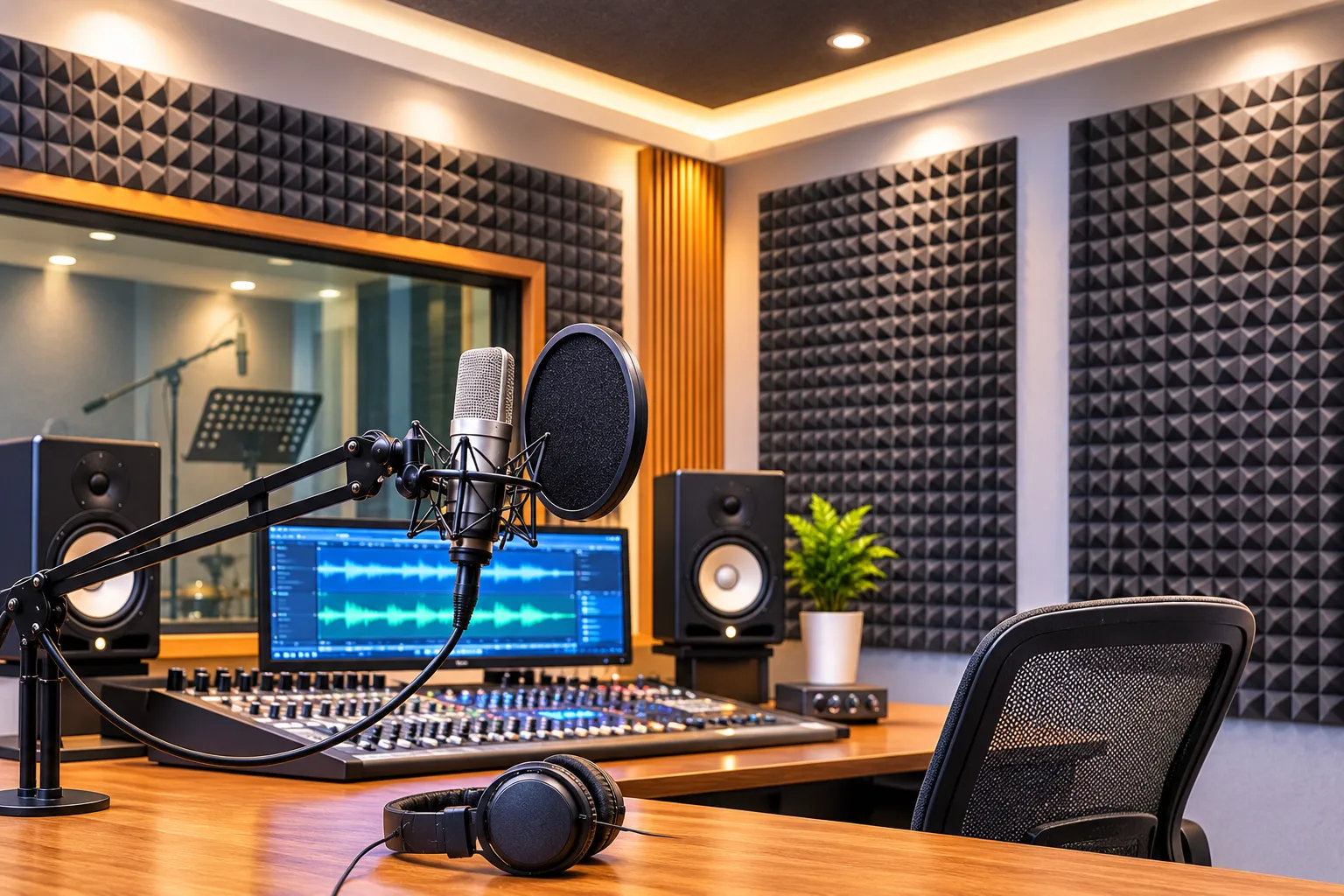
A good studio does not just need good microphones. It needs a room that does not fight the recording. Hard walls, glass and bare ceilings throw sound back at the mic, and the result is a hollow, roomy voice that no plugin can fully fix. Studio acoustic foam panels are the fastest way to bring that room under control. At Ecotone Acoustic Limited, we supply and install studio foam for recording studios, podcast rooms, broadcast booths and corporate media rooms across India.
This guide covers what studio acoustic foam does, which thickness and profile to choose, where to place it and what to check for fire safety in a commercial building.
What Are Studio Acoustic Foam Panels?
Studio acoustic foam panels are open cell foam tiles, usually polyurethane or melamine, made to absorb sound inside a room. Sound enters the foam, loses energy and turns into a tiny amount of heat. Less sound bounces back to the microphone, so voices sound closer, cleaner and easier to edit.
Studio foam is light, easy to cut and quick to fix, which is why media houses and corporate studios use it to treat rooms without heavy construction. You can see our full range on the acoustic foam panels page.
Does Studio Foam Soundproof a Room?
No, and this is the most common mistake. Studio acoustic foam absorbs sound inside the room. It does not block noise coming through walls, doors or the ceiling. If traffic, AC units or the next office can be heard on your recordings, you need isolation as well: dense layers like PACKSOUND mass loaded vinyl, sealed walls and a proper acoustic steel door or acoustic wooden door.
Most professional rooms use both. Isolation keeps the outside world out, and studio acoustic foam panels make the room itself sound right.
Which Profile Works Best in a Studio?
| Foam Type | Best For | Why |
|---|---|---|
| Pyramid Studio Foam | Recording rooms, podcast studios, control rooms | Absorbs evenly from many angles and adds slight scattering, so the room does not sound dead. |
| Flat Studio Foam Panels | Corporate studios, video rooms | Clean look, easy to cover with fabric, good for large wall areas. |
| Bass Trap Corners | Control rooms, mixing rooms | Thick blocks that tame low-frequency build-up in corners. |
| Melamine Foam | Broadcast rooms in public buildings | Higher fire rating and stable in humid conditions. |
For most commercial studios, pyramid acoustic foam on the walls with bass traps in the corners gives the most balanced result.
Which Thickness Should You Choose?
Thickness decides how low the foam can absorb. A simple guide for commercial studios:
- 50 mm: podcast rooms, voice booths and corporate video rooms where speech is the main focus.
- 75 mm: recording studios and dubbing rooms that need fuller control across the voice range.
- 100 mm (4 inch): control rooms and music studios with strong low frequency build up. Add corner bass traps here.
Always ask for tested NRC values by thickness. A good studio acoustic foam panel at 100 mm should give an NRC close to 0.9 or higher.
Studio Foam Setup: Where to Place the Panels
Placement matters more than the number of panels. A clean studio foam setup follows a simple order:
- First reflection points. Place panels on the side walls between the speakers or the talent and the listening position. A mirror on the wall helps find these spots.
- Behind the microphone. The wall behind the voice artist sends sound straight back into the mic. Treat it first in any vocal booth.
- Rear wall. In a control room, studio wall foam on the back wall stops late echoes reaching the mixing position.
- Corners and ceiling. Corners collect bass, and the ceiling above the desk is a strong reflection point. Use bass traps and ceiling panels here.
How Much Studio Acoustic Foam Do You Need?
| Commercial Studio Type | Suggested Wall Coverage |
|---|---|
| Podcast and Video Rooms | 30 to 40 percent of walls |
| Voice Over and Dubbing Booths | 50 to 70 percent of walls |
| Recording Rooms | 40 to 60 percent, plus ceiling reflection points |
| Control and Mixing Rooms | 40 to 50 percent, plus corner bass traps |
Covering every surface makes a room sound flat and tiring. For critical rooms, our acoustic design consultancy team can measure reverberation time and give an exact studio foam design for the space.
Fire Safety in Commercial Studios
Media buildings, offices and colleges have strict fire rules, and low cost foam often fails them. For commercial use, check that the studio acoustic foam is:
- Fire retardant grade with a test report you can attach to the fire file.
- Melamine foam where a higher fire class is required.
- Fixed with suitable adhesive, and mechanically fixed on ceilings.
Studio Foam Design and Colour
A studio is also a workspace and often a showroom for clients. Studio foam design can use patterns of two colours, borders and logo walls. Charcoal and black hide dust well, while white studio foam suits bright video studios and brand colours. If you want a more finished look in client areas, combine foam with fabric sound dampening panels or other sound absorbing materials.
Where We Install Studio Acoustic Foam Panels
- Recording and dubbing studios
- Podcast and video production rooms in offices
- Broadcast booths and control rooms in media houses
- Music studios in colleges and training institutes
- Corporate town hall and webinar rooms
You can see some of this work on our projects page.
Frequently Asked Questions
Is studio foam enough for a professional recording studio?
Studio foam handles echo inside the room. For a professional studio you also need isolation from outside noise and proper bass control.
How long do studio acoustic foam panels last?
Good quality foam lasts many years indoors. Keep it away from direct sunlight and clean it with a soft brush or low suction vacuum.
Can studio foam be fixed on glass partitions?
It can, but it is better to mount foam on thin boards and hang them, so the glass stays clean and the panels can be moved.
Get Studio Acoustic Foam Panels for Your Studio
Whether you are building a podcast room, a dubbing studio or a full broadcast suite, Ecotone Acoustic Limited can help you choose the right studio acoustic foam panels, plan the layout and install them properly. Share your room size and use on our contact page and our team will send a recommendation.
