
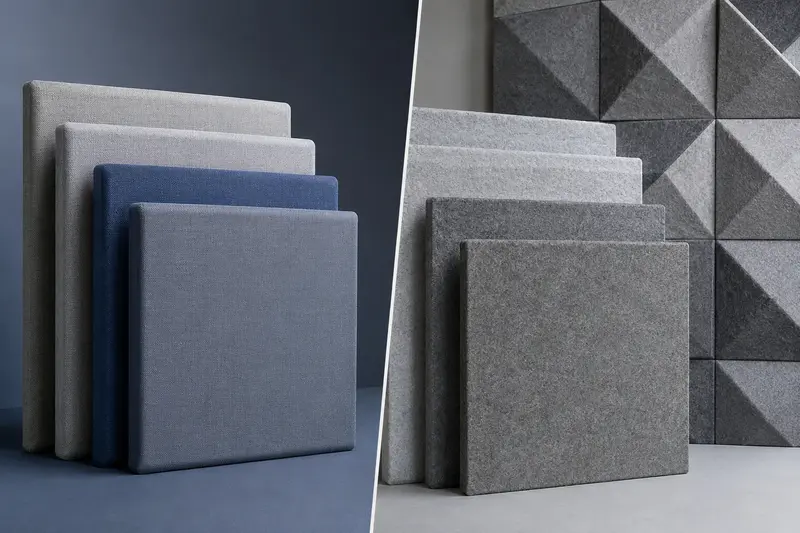
Summary: Choosing between Fabric Wrapped vs PET Felt Acoustic Panels is one of the most common questions architects, interior designers, and facility managers face when planning a quieter, more comfortable space. Both materials reduce echo and improve speech clarity, yet they differ in performance, appearance, and long-term value. This guide breaks down the science and practical trade-offs so you can select the right acoustic panel materials for your project.
What Are Fabric Wrapped Acoustic Panels?
Fabric-wrapped acoustic panels combine a dense core, usually fiberglass, mineral wool, or foam, with an acoustically transparent fabric cover stretched over a wooden or metal frame. Sound waves pass through the fabric and are absorbed within the core, converting acoustic energy into small amounts of heat. These panels are prized for strong mid and high-frequency absorption, custom fabric colors, and a tailored, upholstered look that suits boardrooms, auditoriums, and recording studios.
What Are PET Felt Acoustic Panels?
PET Felt Acoustic Panels are made from compressed recycled polyester fibers, often sourced from post-consumer plastic bottles. Unlike fabric wrapped options, PET felt does not need an outer covering because the material is pre-dyed and self-finished. This gives it a clean, minimalist edge that works well in open offices, schools, and cafes where design flexibility and easy maintenance matter as much as sound control. Also check: Acoustic Panels for Hospitals.
How Do Fabric Wrapped vs PET Felt Acoustic Panels Compare in Sound Absorption?
Fabric wrapped panels generally deliver higher Noise Reduction Coefficient (NRC) ratings, particularly in thicker fiberglass or mineral wool builds, making them the preferred acoustic panel materials for critical sound control. PET felt panels still perform well for everyday echo reduction, typically reaching NRC ratings between 0.30 and 0.85 depending on thickness, but suit moderate rather than critical listening environments. Acoustic panels, by design, control echo and reverberation, most commonly to resolve speech intelligibility issues in commercial spaces, so the right core material directly affects how a room handles conversation and background noise.
Which Acoustic Panel Materials Are More Sustainable?
PET felt has a clear sustainability edge since it is manufactured from recycled plastic and is fully recyclable at end of life, with no fiberglass particles or synthetic resins to worry about. Fabric wrapped panels can also be eco-conscious when the core uses recycled mineral wool and the fabric is low-VOC, but the manufacturing process is generally more resource intensive. For organizations prioritizing green building certifications, PET felt often aligns more naturally with circular design goals.
How Do Cost, Installation, and Maintenance Differ?
PET felt panels are typically easier and faster to install, cut cleanly with a blade, and need little more than dusting to stay fresh. Fabric wrapped panels demand more careful installation and occasional professional cleaning to preserve the finish. Pricing runs slightly higher for fabric wrapped panels due to labor and layering, though both options offer strong long-term value when matched to the space.
Which Panel Type Should You Choose for Your Space?
Choose fabric wrapped panels for spaces needing maximum sound absorption and a refined, tailored aesthetic, such as studios, theaters, and boardrooms. Choose PET felt panels for budget-conscious, design-forward spaces like open offices, classrooms, and cafes where sustainability and quick installation matter most. At Ecotone.co.in, teams often mix both, using fabric wrapped panels where acoustics are critical and PET felt where flexibility and eco-credentials take priority.
Conclusion
There is no single winner between these two materials. Fabric wrapped panels lead in raw absorption performance and premium finishing, while PET felt panels win on sustainability, ease of installation, and design versatility. The better choice depends entirely on your room’s function, budget, and environmental priorities.
Frequently Asked Questions:
Which panel type absorbs more sound, fabric wrapped or PET felt?
Fabric wrapped panels generally absorb more sound overall due to denser cores. PET felt performs well for mid-range echo control but rarely matches fiberglass or mineral wool cores.
Are PET felt acoustic panels actually eco-friendly?
Yes, most PET felt panels are made from recycled plastic bottles and remain recyclable. This makes them a strong choice for sustainability-focused projects.
Can I install acoustic panels myself without a professional?
PET felt panels are easier for DIY installation using adhesive strips or simple fasteners. Fabric wrapped panels benefit from more careful, sometimes professional, mounting.
Do PET felt panels look as good as fabric wrapped panels?
PET felt offers a sleek, modern, self-finished look, while fabric wrapped panels give a softer, upholstered appearance. The better look depends on your design preference.
Which option is cheaper for large commercial spaces?
PET felt panels are usually more cost-effective at scale due to simpler manufacturing and installation. Fabric wrapped panels can cost more but often justify it with superior acoustic performance.
