
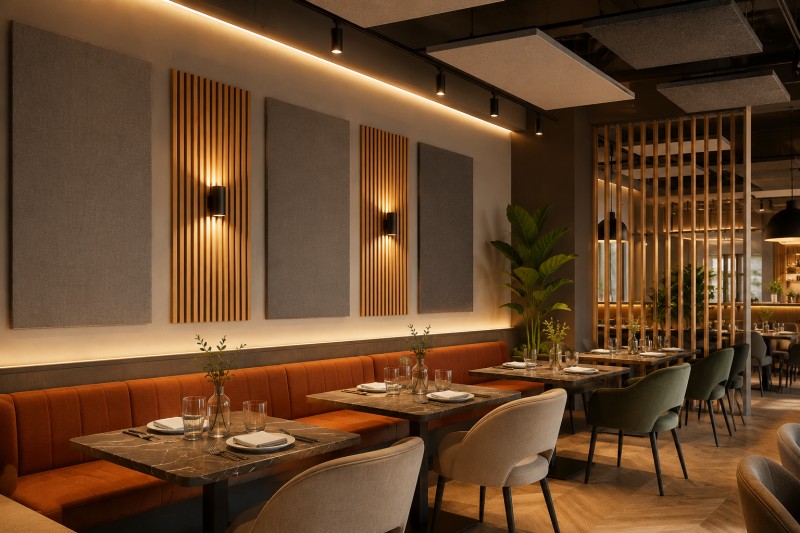
Why Do Restaurants and Cafes Need Sound Absorbing Panels for Restaurants?
Intro: Diners rarely complain about food alone. In most reviews, noise ranks as the top irritant, ahead of service or seating. Sound Absorbing Panels for Restaurants exist to solve exactly this problem: they cut reverberation, calm background chatter, and let guests actually hear each other across the table.
How Does Restaurant Acoustic Design Improve Guest Experience?
Restaurant acoustic design is not just about comfort; it directly affects perception of food and service. Research cited by acoustic specialists shows diners rate meals more favorably in rooms kept between 45 and 55 decibels, while levels above 75 decibels reduce satisfaction. Thoughtful acoustic panels for restaurants address this by absorbing mid, and high-frequency noise from conversation, cutlery, and kitchen equipment before it builds up.
What Are the Best Sound Panels for Restaurants and Cafes?
The right acoustic panels for restaurants depend on the space. Fabric-wrapped wall panels suit dining rooms needing a soft, upholstered look. Acoustic ceiling panels for restaurants work well in open-plan cafes with exposed ceilings, since sound travels upward before returning as echo. Baffles and clouds suit high-ceiling spaces, while decorative felt or PET panels blend acoustic performance with interior styling, a balanced designs its ranges around. Also Check: Acoustic Panels Price Guide.
How Can You Approach Soundproofing a Cafeteria Effectively?
Soundproofing a cafeteria differs slightly from a fine-dining setup, since cafeterias handle higher footfall and harder surfaces like trays and tiled floors. A layered approach works best: ceiling absorption to catch rising noise, wall panels near high-traffic zones, and softer materials on partitions between seating clusters. This reduces echo without requiring structural changes.
Which Restaurant Acoustic Panels Suit Small and Large Spaces?
For compact cafes, restaurant acoustic panels in smaller modular sizes placed near seating areas give the fastest improvement in restaurant acoustics. Larger dining halls benefit from ceiling-mounted arrays combined with wall treatments, targeting both direct and reflected sound paths for balanced coverage.
Conclusion
Noise complaints are one of the easiest problems to fix without a full renovation. By combining ceiling absorption, wall treatment, and smart placement, restaurants and cafes can lower reverberation, protect conversation, and improve how guests remember their visit. Works with hospitality spaces to specify the right mix of Sound Absorbing Panels for Restaurants based on room size, ceiling height, and existing decor, making acoustic comfort a practical addition rather than a compromise.
Frequently Asked Questions
1. Why do new restaurants sound louder than older ones?
Modern interiors favor exposed concrete, glass, and minimal soft furnishing, which reflect sound instead of absorbing it, unlike older spaces with carpets and drapes.
2. Do acoustic panels actually reduce restaurant noise, or just decorate the space?
Genuine acoustic panels absorb sound energy through their core material; decorative-only panels with no absorption rating will not meaningfully lower noise.
3. Where should acoustic panels be placed for the biggest impact?
Ceilings and upper walls handle the most reflected sound, so treating these areas first usually gives noticeably better results than only covering lower walls.
4. Can acoustic panels help with kitchen and cafeteria noise, not just dining areas?
Yes, panels near pass-through windows, tray return stations, and open kitchens reduce clatter before it spreads into the seating area.
5. Will adding acoustic panels change how a restaurant looks?
Not necessarily. Panels now come in fabric, wood-look, and printed finishes, so acoustic treatment can match existing decor rather than disrupt it.
