
Polycarbonate Noise Barrier | Polycarbonate Barrier in India | Polycarbonate Acoustic Barrier | Transparent Noise Barriers
Quick Answer: A polycarbonate noise barrier is a transparent panel system that cuts traffic, rail and industrial noise while keeping views open. Ecotone Acoustic Limited’s 10 to 15 mm polycarbonate barriers reach STC 32 to 36, roughly halving perceived noise, and are made and installed for highways, metro corridors, factory boundaries and housing near busy roads.
Polycarbonate is strong, light and much tougher than glass or acrylic, so it handles stone impact, strong winds and long outdoor exposure. The sheets carry UV protection to slow yellowing and keep the barrier clear for years. Panels are fitted into steel or aluminium frames with rubber gaskets that seal the joints, which is where most barriers leak sound. A clear barrier keeps light and views open for drivers, residents and CCTV, and it can be combined with solid metallic panels on the lower rows for extra absorption. We design each barrier from a noise survey, work out the height and length needed, and then fabricate and install it with our own team.
Delivered across India
Acoustic experience
Survey, supply & install
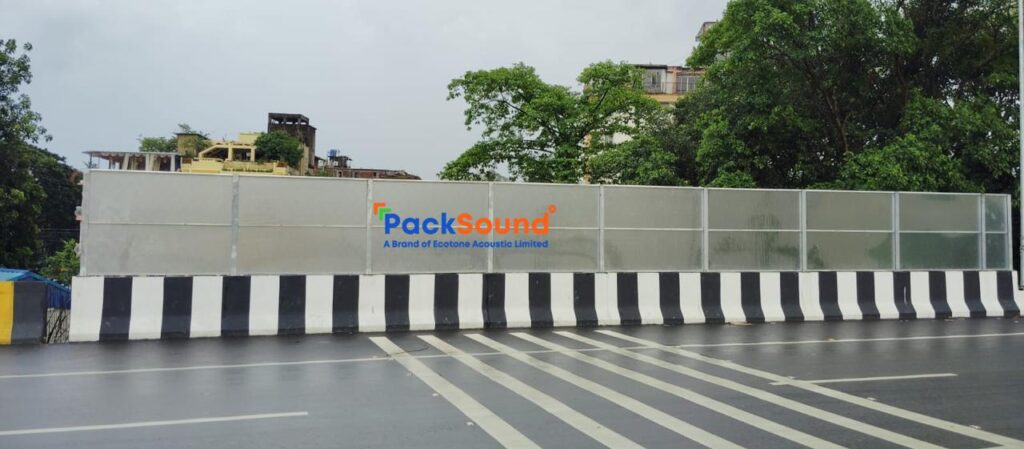
A Polycarbonate Noise Barrier is a transparent acoustic panel system that cuts traffic, rail, and industrial noise by 25 to 36 STC while keeping visibility intact. It suits highway authorities, metro corridors, factory boundaries, and residential complexes near busy roads. If you need noise control without blocking sunlight or sightlines, this is the panel category to specify. Ecotone Acoustic Limited Noise Barrier manufactures and installs these barriers pan-India, with in-house engineering support for site-specific STC targets.
How Does a Polycarbonate Noise Barrier Actually Reduce Sound?
It works through mass, damping, and airtight sealing, not absorption. Dense polycarbonate sheets resist sound wave transmission, while the panel-to-frame gasket seal stops leakage at the joints, which is usually where cheaply installed barriers fail.
- Sound waves hit the rigid polycarbonate face and lose energy as they attempt to pass through
- Internal molecular damping converts vibration into small amounts of heat
- Sealed aluminium pressure caps with rubber gaskets prevent sound leaking through joints
- Frame-to-ground sealing stops noise bypassing the barrier from underneath
How Much Polycarbonate Noise Reduction Can You Expect?
A standard 10-15mm polycarbonate barrier from Ecotone Acoustic Limited achieves an STC rating of 32 to 36, which reduces perceived traffic or rail noise by roughly 50 percent to the human ear. Thicker sheets and staggered panel joints push this higher.
| Sheet Thickness | Typical STC Rating | Best Suited For |
|---|---|---|
| 10 mm | 32 | Residential boundary walls |
| 12 mm | 34 | Highway and arterial road frontage |
| 15 mm | 36 | Rail corridors, industrial plant boundaries |
Sound Transmission Class figures for polycarbonate barriers are commonly benchmarked against the European EN 1793 test series, the standard used internationally to evaluate airborne sound insulation for road traffic noise devices, as documented in CEDR’s technical report on managing road traffic noise.
Polycarbonate Acoustic Barrier Panels and Soundproof Polycarbonate Sheet
Our polycarbonate acoustic barrier panels are made from soundproof polycarbonate sheet fixed in steel or aluminium frames with rubber gaskets. Because the sheet is clear, a polycarbonate barrier keeps views open for drivers, residents and CCTV, which solid noise barrier panels cannot do.
On long stretches, clear soundproof panels are often combined with metallic noise barrier panels on the lower rows, giving a mix of light and heavy absorption on the same structure.
Technical Data Sheet (TDS)
| Parameter | Specification |
|---|---|
| Material | Virgin-grade UV-coated polycarbonate sheet |
| Thickness Options | 10 mm / 12 mm / 15 mm |
| STC Rating | 32 / 34 / 36 |
| Light Transmittance | 90% clear, 80% coloured |
| Tensile Strength | Minimum 60 N/mm² |
| Modulus of Elasticity | Minimum 2000 N/mm² |
| Fire Retardance | EN 1794-2, Annex A, Class 2 |
| Stone Impact Resistance | EN 1794-1, Annex C |
| Yellowing Index | Below 10 as per ASTM D 1925 |
| Frame Material | Hot-dip galvanized steel or aluminium |
| Panel Life Stability | Properties vary under 10% over 10 years |
Transparent Noise Barrier Solutions
Transparent Noise Barrier for Roads and Metro
A transparent noise barrier blocks traffic noise while keeping views and daylight open, which is why it is used on flyovers, bridges and metro corridors.
Transparent Noise Barriers vs Metal Barriers
Transparent noise barriers suit places where a solid wall would feel closed in. Many projects combine them with metal panels, using clear panels at the top or near buildings.
Polycarbonate Barrier in India
We supply polycarbonate barrier in India with UV protected sheets, aluminium frames and fixing details designed for local weather and wind loads.
A Polycarbonate Noise Barrier keeps views open while blocking traffic noise. That is why a Polycarbonate Noise Barrier is common on flyovers, bridges and metro lines near homes and offices.
We supply polycarbonate barrier in India with UV protected sheets and aluminium frames. A polycarbonate acoustic barrier can be combined with metal panels, so the clear section sits at the top or near buildings. Each polycarbonate barrier in India project is designed for local wind loads.
Transparent noise barriers are also safer for birds when they include printed patterns, and they let daylight reach the road. Talk to us about transparent noise barriers, a polycarbonate acoustic barrier or a full Polycarbonate Noise Barrier system for your project. Our team supplies polycarbonate barrier in India with design and installation support, and every polycarbonate acoustic barrier is checked for fixing and drainage details.
| # | Key Benefits |
|---|---|
| 🔇 | Cuts road, rail, and plant noise by up to 36 STC |
| 👁️ | Keeps sightlines and daylight fully intact |
| 🛡️ | Survives stone impact, storms, and vandalism without cracking |
| ☀️ | UV coated and resists yellowing for a decade or more |
| ⚡ | Lighter than concrete, making installation faster and more cost-effective |
| 🔥 | Fire retardant to EN 1794-2 Class 2 |
| 🔧 | Low long-term maintenance with no repainting required |
| S.No. | Application Areas |
|---|---|
| 01 | Highways and Expressway Sound Walls |
| 02 | Metro and Railway Corridor Screens |
| 03 | Residential Complexes Facing Busy Roads |
| 04 | Industrial and Factory Plant Boundaries |
| 05 | Flyovers and Elevated Road Stretches |
| 06 | Schools and Hospitals Near Traffic |
| 07 | DG Set and Machinery Enclosure Surrounds |
| Step | Installation Process |
|---|---|
| 1 | Site survey and noise level assessment |
| 2 | Foundation and post layout marking |
| 3 | Galvanized steel or aluminium frame erection |
| 4 | Polycarbonate panel fitting with gasket seals |
| 5 | Joint sealing to prevent sound leakage |
| 6 | Ground-level acoustic sealing at base |
| 7 | Final inspection and STC verification |
| Myth | Reality |
|---|---|
| Transparent barriers cannot block real traffic noise | Polycarbonate barriers reach 32 to 36 STC, close to solid panels |
| Polycarbonate yellows and clouds up within a year or two | UV-coated sheets stay clear for a decade under ASTM D 1925 |
| Clear barriers are always more expensive than concrete | Lighter weight cuts installation and foundation costs significantly |
| Any polycarbonate sheet works fine as a noise barrier | Only acoustic-grade sheets with sealed frames deliver rated STC |
Why Choose Ecotone Acoustic Limited as Your Polycarbonate Noise Barrier Manufacturer
Ecotone Acoustic Limited designs, fabricates, and installs polycarbonate noise barriers from its own manufacturing facility, which means STC ratings quoted in the proposal are the ones tested on site, not borrowed from a generic datasheet. As a polycarbonate noise barrier manufacturer working directly with highway contractors, metro agencies, and industrial clients across India, Ecotone Acoustic Limited handles structural design, panel fabrication, and frame installation under one roof, so acoustic performance is not lost in handoffs between a sheet supplier and a separate installation contractor.
Frequently Asked Questions:
Yes, a properly sealed polycarbonate barrier reaches 32 to 36 STC, cutting audible traffic noise noticeably.
Polycarbonate handles low-frequency noise and impact better; acrylic offers slightly clearer optical transparency.
UV-coated panels typically perform reliably for 10 or more years with minimal degradation.
Quality UV-coated sheets stay clear; uncoated or cheap sheets yellow within a few years.
Yes, they meet EN 1794-1 stone impact and high wind-load resistance standards.
12mm to 15mm is standard for highway and rail corridor sound insulation projects.
Yes, Ecotone Acoustic Limited’s panels meet EN 1794-2 Class 2 fire retardance requirements.
It reduces noise like a wall but keeps full visibility and natural daylight.
Polycarbonate is often cheaper overall due to lighter foundations and faster installation.
Specialized acoustic manufacturers like Ecotone Acoustic Limited handle design, fabrication, and on-site installation together.
Related Products

Noise Barriers
View product →
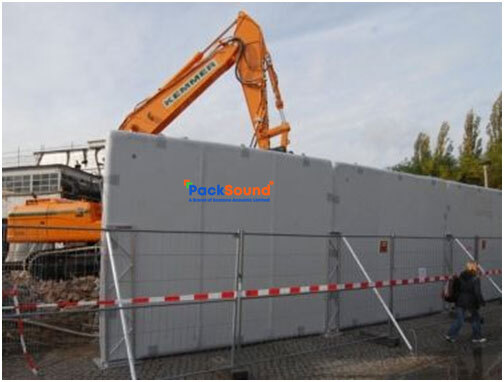
Mobile Noise Barrier
View product →

Metallic Noise Barrier
View product →
Tunnel Acoustics
View product →
Acoustic Design Services
View product →
Acoustic Panels
View product →
Talk to our acoustic engineers for a free site assessment.