Call ✆ +91 9809802016 | 9891320678

Noise leaking through regular doors can be frustrating. Acoustic doors block unwanted sound and work as a powerful solution. These heavy-duty barriers weigh between 150 to 300 kg and cut down sound transmission effectively. Most interior doors in India have hollow cores that lead to noise problems.
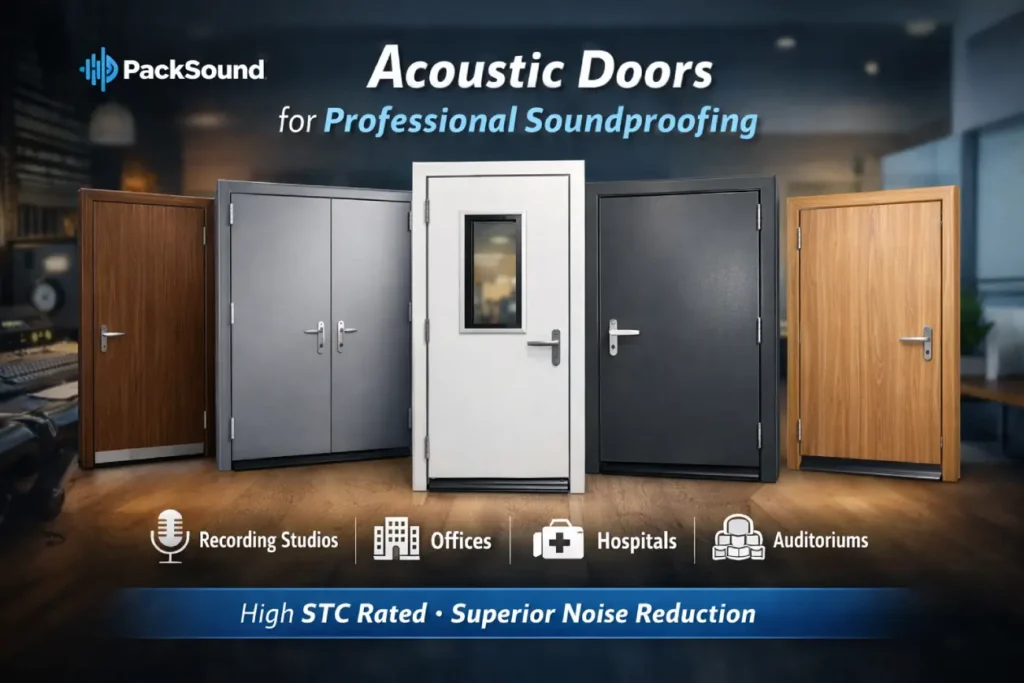
Sound waves get absorbed by soundproof doors that stop noise from moving in or out of spaces. These doors come in thickness ranges of 65 mm to 100 mm with STC ratings from 36 to 50. A 50% drop in sound volume happens with each 10dB increase. This becomes vital since city traffic noise can hit 85dB or higher.
PackSound acoustic doors offer features that work well in studios, offices, hospitals, and auditoriums. You’ll find details about their construction, technical specs, and how acoustic seals boost their performance. Different soundproof door options are available that might solve your noise control challenges perfectly.
Sound waves get absorbed by soundproof doors that stop noise from moving in or out of spaces. These doors come in thickness ranges of 65 mm to 100 mm with STC ratings from 36 to 50. A 50% drop in sound volume happens with each 10dB increase. This becomes vital since city traffic noise can hit 85dB or higher.
PackSound acoustic doors offer features that work well in studios, offices, hospitals, and auditoriums. You’ll find details about their construction, technical specs, and how acoustic seals boost their performance. Different soundproof door options are available that might solve your noise control challenges perfectly.
Acoustic doors are special building components that keep sound from moving between spaces. Regular doors just block physical entry, but acoustic doors work as complete sound barriers that stop noise from moving in or out of rooms. These doors make spaces more comfortable and private by blocking sound vibrations between areas.
The design makes acoustic doors work so well. They use dense materials at their core to absorb sound energy and stop it from passing through. These doors also have strong airtight seals along the edges that prevent sound leaks. Heavy-duty frames complete the design by stopping vibrations that could carry sound.
You can customize acoustic doors to match different decibel requirements and uses. They come in metal, wooden, and fire-rated versions to fit different settings. These doors have several key parts:
Manufacturers rate these doors based on knowing how to reduce sound, with ratings from 20dB to 60dB. This system shows how well they block sound—higher numbers mean better performance. A 10dB increase cuts the sound you hear by about half.
These doors do more than block sound. They often include fire safety features, help with temperature control, and come in many finishes like high-gloss paint and veneer options.
Acoustic door construction requires more sophistication than standard door design. Multiple elements must work together to create a sound barrier between spaces. Each part contributes to reducing sound in its own unique way.
Sound moves through doors in two ways: through the material itself and through air gaps. Soundproofing focuses on absorbing sound energy, while acoustic isolation prevents sound from moving between spaces. A well-built acoustic door combines sound-absorbing materials with airtight sealing systems. The difference between simple soundproofing and true acoustic isolation lies in construction quality and elimination of sound leaks.
Three elements work together to make acoustic doors effective:
Mass: Heavy materials block more sound by resisting sound wave vibrations. Acoustic doors use high-density cores and multi-layer panels that resist sound transmission better.
Core Materials: The inside structure contains specialized acoustic inserts like mineral wool, composite materials, or engineered insulation. These materials absorb sound waves instead of letting them pass through.
Sealing Systems: This is the most important part—even the best door won’t work without proper sealing. Acoustic doors use drop-down seals, perimeter gaskets, and tight-fitting frames to close all gaps. Research shows that sealing becomes vital for high sound insulation doors (STC 50 or higher).
A room’s soundproofing is only as good as its weakest point. Regular doors often become that weak spot and let sound escape through gaps or the door material. A tiny opening can significantly reduce sound insulation—this is called the “flanking path.”
These doors help maintain privacy in conference rooms and medical facilities where people need confidential conversations. They also create the right acoustic environment in theaters, recording studios, and performance venues where sound quality matters most. Hospitals use these doors to create healing spaces by blocking external noise that affects patient recovery.
The combination of specialized components creates a complete sound barrier where regular doors would fail. This makes acoustic doors a cornerstone of noise control strategies.
Sound waves need a path to travel. Acoustic doors block these paths through multiple mechanisms that work together. These specialized barriers work because of their sophisticated construction and precise engineering.
High-quality insulation materials like Rockwool or mineral wool fill the cavity inside acoustic doors and reduce sound transmission by a lot. These materials absorb sound waves instead of letting them pass through. Rockwool’s unique stone wool composition makes it work exceptionally well by trapping sound energy in its structure. The non-directional fiber orientation and higher density help dampen vibrations. A properly installed Rockwool insulation can reduce the noise level you hear by up to eight times.
Acoustic doors have an external structure made of multi-layered Galvanized Iron (GI) and Cold Rolled Close Annealed (CRCA) steel sheets. Manufacturers build these doors with 1.2 mm or 1.6 mm thick GI sheets to provide rigidity. Mild steel pipes or ISMC profiles form the door frame on all sides, creating a solid foundation. The door shutter uses 16 or 18 SWG CRCA or GI sheets that make it strong and durable. Sound waves cannot penetrate through this multi-layer construction.
Small gaps can reduce acoustic performance drastically. Acoustic doors employ specialized sealing systems that include neoprene or EPDM rubber gaskets between the door frame and shutter. The drop seals automatically close the gap at the bottom when someone shuts the door. These components create an airtight seal around the door that stops sound from leaking through tiny gaps.
Sound Transmission Class (STC) ratings measure how well acoustic doors work. Better noise reduction comes with higher STC values. You’ll find standard acoustic doors with ratings from 36 to 50 STC, while specialized doors can reach up to 54 STC. The STC scale works logarithmically, which means adding just 3 points doubles the sound reduction. Door thickness ranges from 65mm to 100mm, and thicker doors reduce more sound.
PackSound provides acoustic door configurations that meet your specific noise control needs. Each door type combines specialized materials and construction techniques to deliver superior sound isolation performance.
Single leaf acoustic doors are an effective solution for standard doorways that need sound isolation. The doors feature 52mm thick steel made from 18SWG galvanized steel sheets with proprietary acoustic insulation materials between them. These doors work perfectly in hospitals and provide excellent sound reduction at approximately ₹9,000 per square meter.
Double leaf acoustic doors feature 1-3/4″ core doors with hollow metal frames and low-profile sealing systems that install easily and look great. Auditoriums and conference rooms benefit from these doors as they provide both sound isolation and easy access through wider openings.
Sound isolation needs often require visibility between spaces. Our doors come with soundproof glass vision panels that solve this challenge. The panels consist of two 6mm toughened glass pieces with a 12mm argon gas-filled gap and silicon sealing. This design lets you see through while maintaining the door’s acoustic properties.
Metal acoustic doors deliver outstanding soundproofing and durability. The multi-layer construction uses 16 or 18 SWG CRCA or GI sheets for strength and longevity. High-density Rockwool (96kg/m³) fills the cavity and absorbs sound waves effectively. These doors achieve STC ratings from 36 to 44. Recording studios, theaters, and industrial facilities choose these doors frequently.
Wooden acoustic doors combine style with sound control. The doors feature 55-60mm thick shutters and first-class hardwood frames with 650 kg/m³ density. The construction combines calcium silicate boards, treated hardwood internal framework, and 30mm thick rockwool infill. With STC ratings of 35-40 dB, these doors work perfectly in conference rooms and office spaces where looks matter as much as function.
PackSound acoustic doors shine in settings where sound control is significant. These specialized barriers solve specific acoustic challenges in industries and applications of all types.
Professional recording studios just need exceptional sound isolation to block external noise. SilentDoor 50Rw acoustic doors work perfectly for recording studios and concert halls. These doors create a pristine acoustic environment with performance ratings above 50dB, which is ideal for professional audio recording. Laboratory testing certifies that studio doors meet strict isolation standards.
Acoustic door installations make a big difference in hospital environments, especially when you have ICUs and operating theaters. WHO guidelines state that sound levels should stay below 35 dB in patient rooms. Recent studies show that monitor alarms, ventilators, and staff conversations generate almost 80% of disruptive noise in ICUs. Soundproof doors help manage to keep the recommended 30-35 dB nighttime noise levels that help patients heal and recover.
Privacy is a vital requirement for conference rooms where sensitive discussions take place. Meeting spaces with proper acoustic doors prevent conversations from leaking outside and support both confidentiality and focus. A well-designed acoustic meeting room blocks external distractions and improves conversation clarity during team sessions.
Auditoriums present unique acoustic challenges, specifically in managing reverberation. Solid-core doors with higher STC ratings effectively block external noise. Speech intelligibility works best with reverberation times between 1.0 to 1.5 seconds. Acoustic doors help strike the perfect balance between a space sounding “alive” versus becoming an “echoic mess”.
Sound Transmission Class (STC) ratings measure how well acoustic doors block noise. These numbers show how much sound a door can stop from moving between spaces.
Acoustic doors have STC ratings that range from 30dB to 60dB. The scale works in a special way – just 3 STC points higher means twice the sound reduction. People speaking loudly can still be heard through doors rated STC 30-34, but normal conversations become hard to understand. Doors with STC 35-39 make loud speech muffled and words become tough to catch. The STC 40-49 rated doors reduce loud speech to barely noticeable levels. The best performing doors with STC 50-54 let only the faintest sounds through, even when they’re very loud.
The difference between STC 45 and STC 50 matters a lot in real-world use. Hospital patient rooms use STC 45 doors as recommended by FGI. STC 50 doors work even better and stop almost all regular speech from getting through. This five-point jump doubles how much quieter things sound. STC 50 meets IBC requirements for homes and ANSI standards that schools need for their classrooms.
Labs test these doors carefully using strict methods. Tests happen in controlled settings that follow ASTM E90 standards. They measure how much sound gets through at frequencies from 125Hz to 4000Hz. The results match up with reference curves from ASTM E413 to determine the final STC rating. Indian standards use IS-9901, which matches international ISO 140 protocols.
PackSound acoustic doors come with many customization options beyond their standard configurations. You can customize these doors to match your functional needs and priorities.
PackSound acoustic doors work well with double-glazed vision panels that don’t affect sound insulation. These panels use special technology with two panes of toughened glass and an argon-filled gap between them. You can choose powder-coated frames in different colors that match your interior design. The double-glazed vision panels let you see through while blocking noise. They are perfect to monitor spaces without losing sound protection.
PackSound’s fire-rated acoustic doors are perfect when you need both sound isolation and fire safety. These doors provide 1-hour and 2-hour fire resistance among other STC ratings from 35 to 55. They meet strict standards like BS: 476 Part 22 and IS-3614 Part 2. You won’t need separate doors for fire and sound protection.
Good looks matter as much as performance. PackSound doors come with attractive finishes like powder coating and polyurethane (PU) paint. These finishes help the doors blend with your architectural designs. The powder coating is 120 microns thick and looks great while lasting long.
Each PackSound door comes with premium hardware that improves its performance and ease of use. The standard features include stainless steel ball-bearing hinges, back-to-back handles, quality locks, door closers, panic exit mechanisms, tower bolts, and drop-down seals. These parts make the door work smoothly while keeping its sound-blocking properties intact.
PackSound’s SonicGuard™ acoustic doors use advanced engineering to block sound waves from passing through. Their effectiveness comes from a multi-layer construction that combines solid wood, engineered wood, mineral wool, and acoustic composites. This well-laid-out design creates a strong barrier against sound energy.
We designed these doors to disrupt sound waves that usually pass through standard doors. The heavier materials in PackSound doors block and absorb sound waves better than lighter options. This mass principle explains why these acoustic doors weigh between 150-300 kg.
The layered construction acts as a defense system against noise. Different acoustic properties in each layer trap sound waves and prevent them from passing through. The specialized acoustic insulation materials like rockwool absorb sound energy rather than letting it transmit.
The doors use precision-engineered perimeter seals among other drop-down bottom seals that block potential sound leaks. The smallest gaps could otherwise affect acoustic performance.
The door’s internal structure uses acoustically decoupled elements – components without rigid connections – that prevent vibration transfer. This technique, combined with acoustic infill materials, delivers the right balance between sound absorption and low-frequency mass containment. These features help achieve sound reduction ratings up to STC 55, making these doors ideal for environments that just need exceptional acoustic control.
Acoustic doors play a vital role in places where sound control matters for function, privacy, and comfort. These specialized barriers serve specific purposes in environments of all types.
Recording studios need acoustic doors with high STC ratings that reach above 50dB to create isolated recording spaces. The core team at professional studios depends on doors that block outside noise and keep sound inside. These soundproof doors come with special acoustic seals and multiple layers. This design creates perfect conditions to capture audio without any unwanted noise in the background.
Executive offices and conference rooms get huge benefits from acoustic doors during sensitive discussions. These doors create quiet zones where employees can work without distractions in open office layouts. Client meeting spaces with soundproof doors show professionalism by keeping conversations private. This helps build trust and improves communication.
Healthcare facilities use acoustic doors in ICUs and operating theaters to keep sound levels between 30-35dB for patients who need rest. These special barriers block noise from medical equipment, staff talks, and alarms that add to hospital noise. Soundproof doors in counseling rooms and psychiatric wards protect private medical discussions.
Theaters and performance venues need acoustic doors that manage echo and reverberation. Movie theaters, concert halls, and school auditoriums use doors that achieve acoustic ratings up to Rw41. These doors also work as fire and smoke barriers. Well-installed acoustic doors create the best sound environments for shows while keeping outside noise away.
Hotel’s guest rooms need soundproof doors to ensure privacy and comfort. Banquet halls and conference facilities use acoustic doors to keep event noise contained without disturbing other guests. These doors often feature decorative finishes that match interior designs while maintaining sound isolation.
Industrial settings create unique acoustic challenges, especially when you have generator rooms with noise levels above 100dB. Machine rooms, testing facilities, and manufacturing units need heavy-duty acoustic doors to contain loud noise. These doors feature advanced sealing systems and lab-tested sound ratings. This makes them perfect for high-noise industrial spaces like compressor enclosures and turbine pits.
Acoustic doors provide multiple advantages that go way beyond simple noise reduction. These specialized barriers create secure environments where privacy runs strong—conversations in conference rooms remain confidential, patient consultations stay private, and sensitive business discussions never escape meeting spaces.
The doors boost concentration and productivity by eliminating distracting background noise that disrupts thought processes. Soundproof doors minimize noise pollution in workspaces near machinery or high-traffic areas that would cause stress and reduce efficiency.
Better sleep quality comes from acoustic doors that block disruptive external sounds preventing proper rest. People develop healthier sleep patterns essential for overall wellbeing.
The versatility of acoustic doors impresses even more as they provide both noise reduction and fire protection. These fire-rated acoustic doors contain flames while reducing overall property damage. This gives people extra time to evacuate during emergencies.
Sound isolation ranks high on buyers’ wish lists, making these specialized doors a valuable property investment. The proper sealing improves energy efficiency and helps maintain indoor temperatures, which ended up reducing heating and cooling costs.
Acoustic doors create healing environments in healthcare settings by maintaining the 30-35dB noise levels needed for patient recovery. They also promote learning environments in educational institutions by keeping external disruptions away.
The acoustic performance of soundproof doors depends on proper installation and maintenance. Understanding technical requirements beforehand will give optimal noise reduction results.
Pre-hung acoustic doors come with the door already mounted in its frame. This makes installation easier for new constructions. Retrofit installations work with existing openings but just need more precision. All acoustic frames need proper backfilling—mortar or vermiculite and setting plaster work better than foam or fiberglass. This step maintains structural integrity and preserves sound isolation properties. The doorset’s weight needs adequate support from surrounding wall structure. Acoustic mastic at least 10mm wide should seal all jamb surrounds.
Hinged acoustic doors provide better sealing capabilities with simpler installation. These doors need minimal changes to existing structures and deliver reliable sound isolation. Acoustic sliding doors require track systems mounted on walls or ceilings, which makes installation more complex. The sliding options work best in space-constrained environments. Each type needs different maintenance—sliding mechanisms have tracks and rollers that need regular checks. Hinged doors are more relaxed and just need occasional hinge tightening.
Regular maintenance helps maintain acoustic performance. Monthly inspections can catch debris in acoustic seals, which need yearly replacement if worn. Doors rated Rw35 and above work better with threshold seals. Appropriate sealers should cover all four edges and both faces of acoustic doors within seven days of arrival. This prevents moisture absorption. Door hinges need alignment checks every six months to prevent sound-leaking gaps from sagging. A tiny 1% opening can cut sound blocking effectiveness by half.
A deeper look shows clear differences between acoustic and standard doors. Standard doors focus on simple privacy and looks. Their lightweight, hollow-core panels achieve STC ratings of just 15-25. Acoustic doors take things further by using solid, dense, multi-layer composite materials that reach STC ratings between 30-55+.
The sealing system makes a huge difference too. Acoustic doors come with specialized gaskets, drop-down seals, and tight frames. Standard doors have simple seals or none at all. This is what makes acoustic doors so much better at blocking sound.
Acoustic doors’ heavy-duty construction helps them last much longer than standard doors that prioritize budget-friendly design over durability. The noise reduction difference is clear right away – acoustic doors block most sound while regular doors let noise pass through easily.
Standard doors are cheaper at first, since acoustic options need more upfront investment. All the same, their superior performance often makes them worth the extra cost over time.
Your environment should guide your choice of door. Standard doors work fine in homes, but acoustic doors are perfect for studios, hospitals, theaters, offices, and industrial spaces where noise control matters.
PackSound acoustic doors block sound in ways that regular doors can’t match. These specialized barriers turn noisy spaces into peaceful and productive environments through their multi-layer construction. The doors achieve STC ratings between 36 and 55 and cut down sound transmission between rooms dramatically.
These acoustic doors are valuable in many different settings. They provide privacy in medical facilities and sound isolation in recording studios. The doors reduce noise in offices and control acoustics in auditoriums. On top of that, they come with customization options like vision panels, fire ratings, and various finishes to meet both functional and visual needs.
The doors’ heavy-duty construction weighs between 150-300 kg, and specialized sealing systems give PackSound its technical edge. The design eliminates even tiny gaps that would let sound leak through. Regular maintenance and proper installation ensure these doors keep performing at their best.
Sound quality boosts productivity, privacy, and well-being in any space. Choosing the right acoustic door is an investment that pays off over time. Standard doors might be cheaper up front but don’t deal very well with noise issues that hurt concentration, confidentiality, and comfort. PackSound doors provide lasting value through durable construction and superior noise-blocking.
Your space needs solutions that deliver results. PackSound acoustic doors are the answer to unwanted sound. They create environments where conversations stay private, work runs smoothly, and peace rules. Sound-proof your space today and see the amazing difference proper acoustic isolation makes.
PackSound offers premium acoustic doors to upgrade your space. The customization process starts when you share your requirements. You need to provide room dimensions, layout plans, photographs, and simple acoustic requirements to get an individual-specific soundproofing plan that matches your environment.
The PackSound team will create a complete acoustic solution estimate based on your specifications before finalizing your project. Standard products reach you within 7-15 days. Custom solutions or larger installations might take 3-6 weeks from order to completion.
PackSound’s trained teams handle professional on-site installation. This ensures your soundproof doors fit perfectly and deliver optimal acoustic performance.
Ready to start your project? Reach out directly:
Contact Details:
PackSound stands as India’s trusted acoustic manufacturing brand. The company delivers acoustic excellence through premium soundproof doors, acoustic sliding doors, and specialized door sealing systems. These solutions serve studios, offices, hospitals, and auditoriums effectively.
Acoustic doors are specially engineered to block sound transmission. They feature multi-layer construction with sound-absorbing materials, heavy-duty seals, and higher mass, resulting in STC ratings of 30-55+ compared to regular doors’ 15-25 STC.
Acoustic door prices vary widely based on specifications. Basic soundproof doors start around ₹9,000 per square meter, while high-performance STC 56 doors with steel and concrete frames can cost over ₹10 lakh. Custom solutions fall between these extremes.
Effective acoustic doors combine three main elements: mass (heavy materials to block vibrations), specialized core materials (like mineral wool to absorb sound), and comprehensive sealing systems (including drop seals and gaskets) to eliminate air gaps.
Acoustic doors are widely used in recording studios, hospitals (especially ICUs and operating theaters), office meeting rooms, auditoriums, hotels, and industrial settings like generator rooms. They’re essential anywhere noise control and privacy are critical.
To enhance an existing door’s soundproofing, you can add perimeter seals, weatherstripping, door sweeps, acoustic panels, or soundproof blankets. However, for significant noise reduction, replacing it with a purpose-built acoustic door is often more effective.


