Call ✆ +91 9809802016 | 9891320678

Fiberglass Mineral Acoustic Wall Panels are rigid, high-density boards made from compressed glass or mineral fibers that absorb airborne sound and reduce reverberation inside a room. With a Noise Reduction Coefficient (NRC) of 0.85 to 1.00, they are used by acousticians, interior designers, and facility managers to control echo in offices, auditoriums, studios, classrooms, and hospitality spaces. This page is written for architects, MEP consultants, procurement teams, and facility owners who need a fire-rated, sustainable, and field-tested acoustic wall solution, along with the technical data needed to specify it correctly.
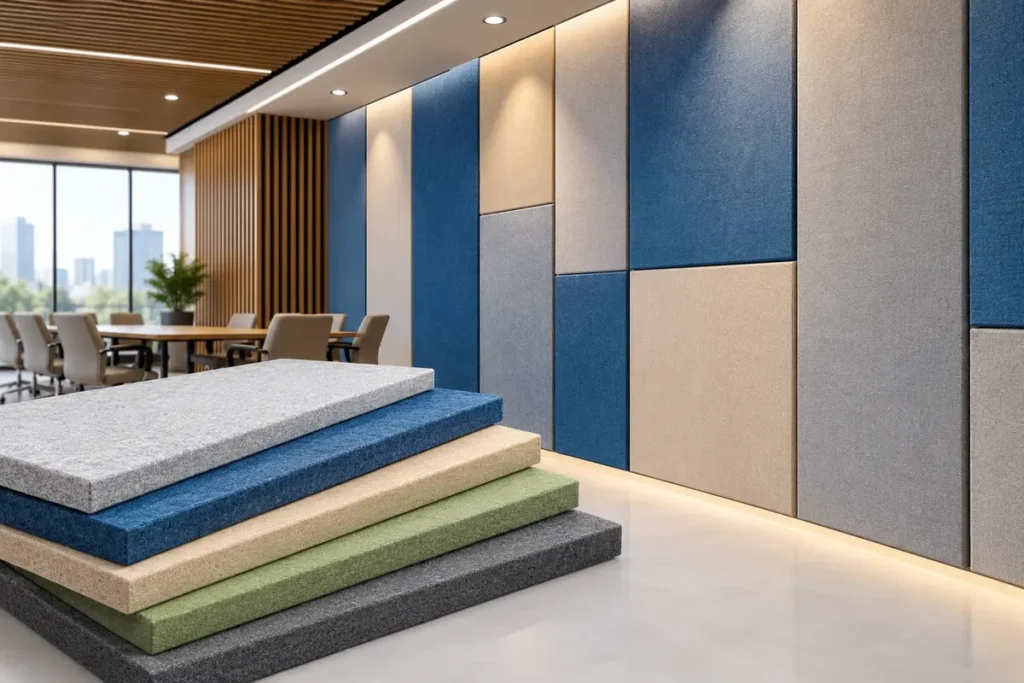
They are rigid boards of compressed fiberglass or mineral fiber, typically 24 to 96 kg/m3 density, wrapped in fabric and fixed to walls to absorb sound energy instead of reflecting it back into the room.
The core is manufactured by compressing glass fibers or mineral wool fibers under heat and resin binder into a rigid, self-supporting board. This is different from soft, flexible fiberglass insulation batts used in walls, which are not designed for exposed acoustic use. The finished panel is then wrapped in an acoustically transparent fabric, which protects the core, adds a decorative finish, and does not block sound transmission into the panel.
High NRC comes from three factors working together: fiber density, panel thickness, and the air gap between the panel and the wall.
According to testing standards published by ASTM International, NRC is calculated as the average of sound absorption coefficients measured at 250, 500, 1000, and 2000 Hz in a certified reverberation room, then rounded to the nearest 0.05. The NRC rating represents the average of the absorption coefficients at 250, 500, 1000 and 2000 hertz, rounded to the nearest multiple of 0.05, using the ASTM C423 reverberation room method. This is why a genuine High NRC Acoustic Wall Panel should always be sold with a lab test report, not just a marketed number.
| Parameter | Value |
|---|---|
| Core Material | Fiberglass or Mineral Fiber, high density |
| Density | 24 to 96 kg/m³ |
| NRC Rating | 0.85 to 1.00 |
| Fire Rating | Class A / Class 1, non-combustible core |
| Facing | Acoustically transparent fabric or perforated finish |
| Standard Thickness | 12mm, 25mm, 50mm |
| Edge Profile | Square, beveled, or tapered |
Performance, Safety and Sustainability
| Benefit | Why It Matters |
|---|---|
| High Sound Absorption | Reduces echo across low, mid, and high frequencies. |
| Fire Resistant Core | Meets Class A fire safety requirements for commercial buildings. |
| Lightweight Rigid Board | Easy handling without sagging over time. |
| Recycled Glass Content | Supports sustainable and green building certifications. |
| Custom Fabric and Print Finish | Matches interior design without losing acoustic performance. |
| Moisture and Mold Resistant | Suitable for humid Indian climates. |
| Long Service Life | No performance degradation for 15+ years indoors. |
| Space Type | Use Case |
|---|---|
| Offices | Open-plan noise and conference room privacy |
| Auditoriums | Speech clarity and reverberation control |
| Recording studios | Accurate sound absorption for mixing and tracking |
| Classrooms | Reduced background noise for better learning |
| Hospitality | Restaurant and hotel lobby noise reduction |
| Commercial interiors | Retail and corporate branding with acoustic function |
| Educational institutions | Auditoriums, libraries, and seminar halls |
| Property | Test Standard | Value |
|---|---|---|
| NRC | ASTM C423 | 0.85 to 1.00 |
| Fire Performance | ASTM E84 / Class A | Class A, non-combustible |
| Density | ISO 845 | 24 to 96 kg/m³ |
| Thickness | Physical measurement | 12 mm to 50 mm |
| Panel Sizes | Standard |
600 × 600 mm, 1200 × 600 mm, 1200 × 2400 mm |
| Recycled Content | Manufacturer declaration | Up to 70% recycled glass |
| Moisture Resistance | Manufacturer testing | Resistant, non-hygroscopic core |
Fiberglass Acoustic Wall Panels
These panels are not only functional but also visually appealing. The design and texture of the panels add a touch of elegance to my office. They blend well with the existing decor and do not look out of place. The range of color options available allowed me to select a shade that perfectly matched my interior design.
Ashwika Bhattacharya
In terms of acoustic performance, these panels have made a noticeable difference. They effectively absorb sound reflections, making the room much more pleasant for conversations and media consumption. The echo and reverberations have been significantly reduced, resulting in a more comfortable and enjoyable living space.
Arnav Patel
I appreciate the fact that these panels are made from fiberglass mineral, as it is a sustainable and environmentally friendly material. Knowing that I have chosen an eco-conscious option gives me peace of mind.
Sanya Verma