Call ✆ +91 9809802016 | 9891320678

Soundproof sheets stand out as one of the best solutions to control noise. Most sound issues stem from internal reflections rather than external noise – about 80% to be precise. The right acoustic solution becomes vital when you need relief from noisy neighbors, street sounds, or room echoes that affect your comfort and work.
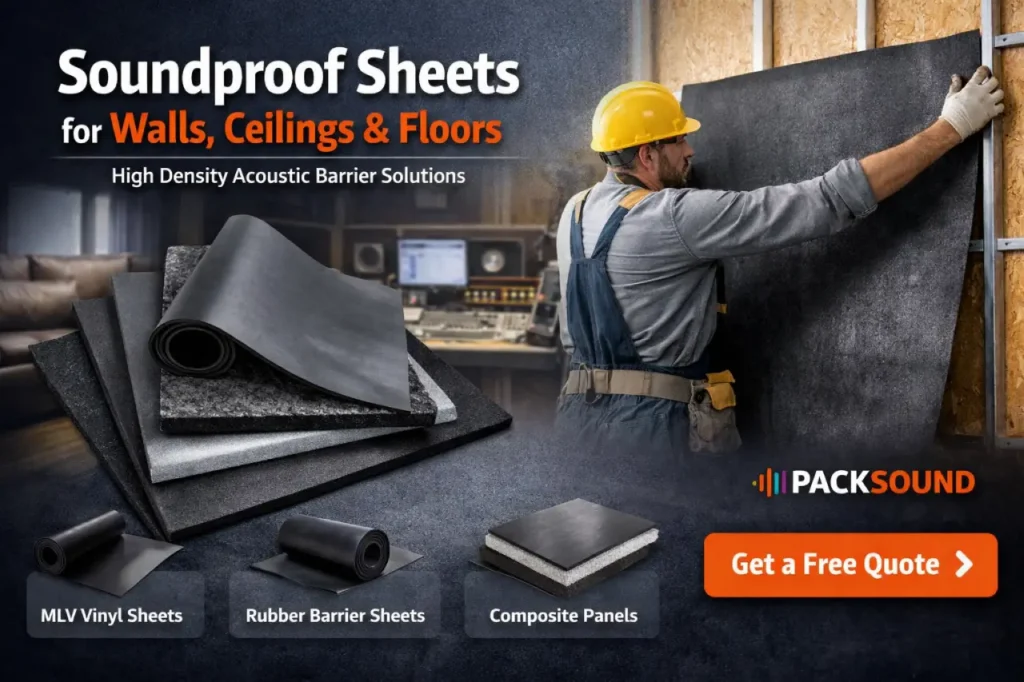
PackSound’s specialized soundproof sheets come in MLV, rubber, and composite materials. The sound dampening sheets pack impressive performance, particularly with materials like Polymax ABSORB.
This self-extinguishing, asphalt-free membrane excels at airborne soundproofing. These soundproofing panels are tough enough to handle extreme temperatures between -40°C and 160°C for up to 2 hours. They work well in a variety of settings.
Mass Loaded Vinyl with densities of 1500 to 1750 kg/m³ and specialized rubber sheets with a 2.0 specific gravity can change your space completely. This piece will help you understand the different types of soundproof sheets for walls. You’ll learn about their applications and find the perfect match for your needs.
Mass Loaded Vinyl with densities of 1500 to 1750 kg/m³ and specialized rubber sheets with a 2.0 specific gravity can change your space completely. This piece will help you understand the different types of soundproof sheets for walls. You’ll learn about their applications and find the perfect match for your needs.

Density 2,200 Kg/m³ with STC 42.7. Blocks 28–32 dB noise through walls, ceilings, floors and enclosures. Ideal for partitions.
Works from -10°C to 60°C. Absorbs vibration and structure-borne noise. Best for flooring, machinery base and isolation.

Blocks and absorbs sound together using layered rubber and acoustic foam for wider frequency control.

Extra mass and density for demanding noise control. Flexible for tight spaces and long-lasting performance.

Available from 1mm to 12mm with custom sizes. Covers uneven surfaces for complete soundproofing.
Used in studios, offices, homes, auditoriums, partitions, ceilings, floors and industrial enclosures.
PackSound soundproof sheets are changing the game in acoustic control technology. These specialized sheets work better than standard noise reduction materials. Their high-density composition blocks sound transmission between spaces. PackSound makes three main types of soundproof sheets for walls and other surfaces. Each type tackles specific sound problems.
Mass Loaded Vinyl (MLV) soundproof sheets create a flexible but heavy barrier. They use compressed PVC granules bonded together to form a thin yet dense membrane. These sheets reach densities of 1900 kg/m³ and block airborne noise really well.
Rubber soundproofing panels are tough and handle temperature changes well. They work in conditions from -40°C to 160°C for long periods. These sheets are great at absorbing vibrations. Their natural dense structure helps dampen sound waves.
Composite sound dampening sheets bring together multiple layers of materials. They use vinyl, rubber, and specialized foams to create a hybrid solution. This layered design blocks and absorbs sound to give detailed noise control at different frequencies.
You’ll find acoustic soundproof sheets in many places:
The main difference between soundproof sheets and soundproof foam comes down to how they work. Soundproof sheets block sound between spaces because of their dense, heavy build. They stop noise from moving through walls, floors, and ceilings—like a barrier against sound.
Acoustic foam works differently. It absorbs sound inside a room and cuts down echoes and reverb. The foam makes room acoustics better but doesn’t stop outside noise from getting in or inside noise from leaking out.
Soundproof sheets use mass and density to block sound. Acoustic foam uses porosity and lightness to absorb it. Sound professionals often recommend using both materials together for the best results.
The right soundproof sheet material choice depends on understanding how different options address specific acoustic challenges. MLV, rubber, and composite materials each bring unique physical properties that make them suitable for different applications.
Soundproof sheets made from MLV excel because of their impressive density-to-thickness ratio. These materials pack densities of 1500 to 1750 kg/m³ into an incredibly thin profile. MLV sheets block sound transmission effectively while remaining easy to install.
The exceptional flexibility of these acoustic soundproof sheets stands out as their key advantage. They easily conform to uneven surfaces and maintain their performance level. You can work around pipes or electrical outlets without compromising the sound barrier. MLV creates an effective sound barrier despite its thin profile (1/8″ to 1/4″) by converting sound energy into minimal heat through its limp mass properties.
Soundproofing panels made of rubber work exceptionally well in places with changing temperatures. These sheets keep their acoustic properties intact even when temperatures range from -40°C to 160°C for up to 2 hours. Industrial settings and mechanical rooms benefit greatly from this thermal stability.
Sound dampening sheets made from rubber resist physical stress and environmental factors remarkably well. Their specific gravity of 2.0 helps reduce sound transmission significantly. The material’s natural density and cellular structure absorb vibrations and prevent them from moving through walls or floors. These sheets also stand up well against moisture, chemicals, and UV exposure.
Soundproof sheets for walls in composite form blend multiple acoustic technologies together. A sound-blocking core, usually MLV, bonds with absorption materials such as foam or fiberglass. This combination tackles both airborne noise and structural vibrations at once.
Composite sound proof sheets use strategic layering to create frequency-dependent performance. They target specific sound problems better than single-material options. Recording studios and multi-family housing benefit from configurations like foam-MLV-foam sandwiches. This setup controls both high and low-frequency noise in complex acoustic environments.
The biggest difference between soundproof sheets and acoustic panels comes down to what they do. You need to understand how each one works to create the right acoustic environment.
Soundproof sheets block sound from moving between spaces. These soundproofing panels use dense, heavy materials like mass-loaded vinyl and rubber. They stop sound from traveling through walls, floors, and ceilings. They excel at keeping unwanted sounds from moving in or out of a room.
Acoustic panels work quite differently. They don’t block sound – they absorb it. This improves the acoustic quality inside a room by cutting down echo and reverberation. Manufacturers make these panels from porous, lightweight materials. They use foam or fabric-wrapped absorptive materials that manage sound reflections inside the space rather than blocking outside noise.
The way we measure their performance differs too. Soundproof sheets get rated by Sound Transmission Class (STC). This shows how well they block sound transmission. Acoustic panels use Noise Reduction Coefficient (NRC) ratings that show how well they absorb sound waves.
Installing these solutions takes different approaches. Acoustic soundproof sheets need more extensive work and might need structural changes. You can mount acoustic panels on surfaces easily.
Visibility sets them apart too. Sound dampening sheets stay hidden inside walls or under floors as invisible structural elements. Acoustic panels remain visible and often become decorative room elements.
Sound management works best with both solutions together. Soundproof sheets for walls create barriers against outside noise. Acoustic panels make internal sound clearer by reducing reflections. This combined approach tackles both sound isolation and acoustic quality.
The science behind soundproof sheets shows how these materials solve sound problems through physical principles. Understanding the basic acoustic mechanisms helps maximize how PackSound products work.
Soundproof sheets block sound by creating dense barriers that reflect sound waves back. This is different from sound absorption, which uses porous materials to catch sound waves and turn their energy into heat. Soundproofing panels isolate spaces, while absorptive materials make room acoustics better by cutting down echo and reverberation. Sound management works best when acoustic soundproof sheets block outside noise and absorption products improve inside acoustics.
PackSound sheets tackle two types of noise. Airborne noise like voices, music, and traffic moves through air before hitting barriers. Impact noise happens from direct physical contact and sends vibrations through building parts. Each type needs its own solution because airborne noise leaks through gaps and thin barriers. Impact noise becomes structure-borne sound that travels through joists and studs. Sound dampening sheets with high mass block airborne noise well, and STC ratings measure this effectiveness.
Multiple soundproof sheets for walls work better together through smart layering. Mass addition, structure separation, and air gaps boost sound isolation. Professional installers use resilient channels or isolation clips with soundproof foam to stop vibration paths. These methods work well for both high and low-frequency noise problems.
Several factors determine how well soundproof sheet materials work. Density is vital—materials between 2.5 to 3.0 lb/cu.ft. usually give the best acoustic results. Thicker materials generally work better, though benefits decrease after a point. STC (Sound Transmission Class) ratings measure how well acoustic soundproof sheets block sound frequencies of all types.
Soundproof sheets work best when you install them correctly. Even the highest quality sound dampening sheets won’t work well if you place them wrong. You can reduce noise by following these proven installation steps.
Careful placement works better than random coverage. You should place soundproofing panels where sound first bounces off surfaces. Acoustic soundproof sheets need to cover 20-30% of reflective surfaces to make a real difference. A laser level helps maintain consistent height during ceiling installations.
You’ll get better sound isolation by adding soundproof sheets for walls between joists. Start by applying Green Glue between subfloor and drywall strips that fit between ceiling joists. Adding resilient sound clips creates a floating ceiling that blocks direct vibration. You’ll need to pre-drill holes for concrete or gypsum substrates, though it takes extra time.
Both methods have their benefits. Adhesive creates a clean look without visible fasteners and makes an unbroken sound barrier. Apply it in a perimeter bead 2 inches from the edge, plus an X-pattern and dollops in the center. Mechanical fastening works better with uneven surfaces or ceiling installations. Panels should be secured with screws on walls that have major irregularities.
Your specific situation determines the best installation method. Consider your substrate material, looks, and future access needs. Mechanical fastening proves more reliable for soundproof foam and barrier sheets in industrial areas with temperature changes.
You need to know the strengths and limits of soundproof sheets to decide if they match your acoustic needs. Let’s look at the key factors that affect how well they work and where you can use them.
Soundproof panels‘s excellent performance comes from their dense construction. These sheets can reach densities up to 2,200 kg/m³ and block sound effectively through walls and ceilings. Sound dampening sheets come with fire-retardant features that meet certified standards like B-s2, d0, which makes them safe for commercial spaces. This feature becomes a great advantage especially when you have to follow strict building codes in public areas.
One of the most important benefits of acoustic soundproof sheets is how easy they are to install. You can cut them with regular scissors to fit any space. On top of that, these soundproofing panels last long and resist moisture well, so they keep working even in tough conditions.
These soundproof sheets for walls work well but have their limits. The biggest problem is that they can’t handle regular foot traffic, so you’ll need extra protection to use them on floors. While soundproof foam and sheets block airborne sound well, they don’t do much against strong vibrations. Some low-frequency sounds might still get through, even though these barriers work great for mid and high-frequency noise.
Professionals choose soundproof sheets from PackSound, and with good reason too. Their approach goes beyond basic product specifications. Soundproofing panels by PackSound have built their reputation by focusing on solutions rather than selling generic acoustic products.
PackSound stands out because of their detailed end-to-end methodology. Their specialists examine room volume, ceiling height, space purpose, occupancy, and existing materials before suggesting any acoustic soundproof sheets. This full picture will give a perfect match between your sound dampening sheets and the acoustic performance you need.
The company blends precision engineering with advanced acoustic science and provides complete acoustic consulting services. Their expertise covers 3D acoustic modeling, RT60 reverberation analysis, and speech intelligibility testing. Architects and interior designers prefer working with PackSound because of their technical excellence and design sensitivity.
PackSound’s development philosophy puts safety and sustainability first. Their soundproof sheets for walls use fire-rated materials that work well in commercial settings. Major global brands like Pfizer trust PackSound’s quality and expertise, proving it right as an innovator.
PackSound creates acoustic solutions that add lasting value from consultation and design through manufacturing and installation. They revolutionize ordinary spaces into exceptional environments.
Choosing the right soundproof sheets means understanding their prices and long-term benefits. Acoustic soundproof sheets from PackSound come at different price points that depend on their materials and performance features.
PackSound MLV soundproofing panels cost about ₹50 per square foot. This puts them right in the middle of the market. Sound dampening sheets made from rubber cost ₹125 per square meter. The price of composite solutions that combine different materials ranges from ₹60-100 per square foot based on how thick and dense they are. You’ll pay 10-15% more for custom-sized soundproof sheets for walls compared to standard sizes.
Soundproof foam at the entry level costs ₹55-75 per square foot with NRC ratings below 0.60. These work great for homes. Most offices and commercial spaces need mid-range sound proof sheets that cost ₹75-200 per square foot with NRC values of 0.70-0.85. Professional studios and critical listening rooms need premium acoustic soundproof sheets with NRC ratings above 0.85, which cost ₹220+ per square foot.
PackSound delivers excellent performance at reasonable prices. Armstrong has many products and Ecophon focuses on sustainability research. PackSound stands out with customer satisfaction scores above 4.8/5. The company creates custom solutions and provides excellent support. Large projects get special prices when ordering more than 500 square meters. This makes PackSound an affordable choice for bigger installations.
People often ask questions about soundproof sheets as they plan acoustic improvements. Here are answers to common questions about these noise control solutions that work.
Do soundproof sheets actually work? Absolutely. Acoustic soundproof sheets block sound transmission between spaces effectively if you install them correctly. Their effectiveness depends on the material’s thickness and density.
What’s the difference between 1lb and 2lb mass loaded vinyl? The 2lb MLV soundproofing panels have twice the mass of 1lb sheets and block sound better. One-pound sheets suit residential noise reduction, while two-pound versions excel in commercial and industrial settings.
Can I install soundproof sheets myself? Yes. Most DIYers can install sound dampening sheets competently. Complex projects might need professional installation to work best.
Will acoustic panels alone soundproof my space? No. Soundproof foam and acoustic panels absorb sound within a room and reduce echo and reverberation. You need soundproof sheets for walls to block noise transmission completely.
How thick are soundproof MLV sheets? The thickness ranges from 1/16 inch (1.5mm) to 1/8 inch (3mm), and heavy-duty versions can reach 1/4 inch (6mm).
Can soundproof sheets be used in vehicles? Yes. Sound proof sheets like MLV reduce engine, road, and cabin noise effectively in cars, busses, and commercial vehicles.
PackSound soundproof sheets are one of the most versatile and reliable solutions to control noise. These acoustic soundproof sheets work well in spaces of all types, from recording studios to homes. The high density, durability, and specialized materials make soundproofing panels a smart investment that improves acoustic comfort by a lot.
Different materials serve unique purposes, and each type gives exceptional results with proper installation. MLV sheets block airborne noise well because of their impressive density-to-thickness ratio. Rubber options last longer and resist temperature changes better. Of course, composite solutions give you the best of both worlds by combining blocking and absorption properties in one product.
PackSound’s detailed approach to acoustic challenges makes them different from competitors. They don’t just sell products – they study your needs and suggest solutions that fit. This careful attention means you get exactly what you need for your situation.
These sheets do more than just reduce noise. They help create spaces where people can focus, relax, and work better. Their effectiveness comes from smart use of mass, density, and strategic placement, which is why they work better than many standard soundproofing methods.
The sheets may cost more at first, but they’re worth it in the long run because they last long and need little maintenance. Better acoustics in homes and offices make this investment pay off through improved comfort and productivity.
PackSound’s soundproof sheets are a tested solution for anyone with noise problems. Science and professional expertise back these products. You can use these versatile sheets to block outside noise or improve indoor acoustics – they’re reliable enough for any sound management need. Creating the right acoustic environment means more than lowering decibels. It’s about making your space comfortable, private, and perfect for its purpose.
Soundproof sheets deliver benefits that go way beyond simple noise reduction. Acoustic soundproof sheets tackle sound management with advanced techniques and give solutions to many sound-related challenges.
Soundproofing panels excel because they know how to control noise at different frequency ranges. This makes them perfect in settings of all types – from home theaters to industrial facilities. These sound dampening sheets also boost privacy and stop conversations from leaking between rooms.
Quality soundproof sheets for walls make a real difference to your well-being. Studies show that too much noise exposure leads to stress, poor sleep, and lower productivity. Soundproof foam and barrier materials create a buffer against unwanted noise and help you relax and focus better.
PackSound soundproof sheets are built tough. They resist wear and tear, moisture, and temperature changes. This toughness means they’ll keep working just as well years down the line – making them worth the investment.
Modern acoustic foam sheets adapt to your specific needs. You can cut, trim, and install them anywhere – under floors, behind walls, or draped over surfaces when you need quick soundproofing.
While sound proof sheets work exceptionally well, they cost less than old-school soundproofing methods. They’re affordable and need minimal upkeep, which saves money for homeowners and businesses alike.
Today’s soundproof sheet for wall options use eco-friendly materials. This green approach adds value and appeals to people who want both great acoustics and environmental responsibility.
These materials boost workplace efficiency by creating quiet spaces where people concentrate better. At home, they transform spaces into peaceful retreats from outside noise.