Call ✆ +91 9809802016 | 9891320678

Whether it’s an office, a classroom, a restaurant, a gym, or a manufacturing unit, controlling noise is one of the biggest challenges in modern interiors. At PackSound, we work closely with architects, interior designers, facility managers, and project owners to help them understand how excessive reverberation and echo affect productivity, comfort, and the overall experience of people within a space. Often, clients reach out only after their newly designed spaces sound too loud, too echoey, or distracting, even though the interior design looks perfect. Our acoustic solutions, including acoustic baffles, ceiling panels, and soundproofing treatments, are specifically designed to tackle these challenges efficiently while maintaining the aesthetic and functionality of the space.
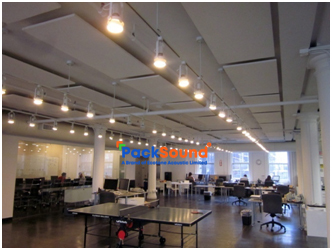
Hard surfaces like glass, metal, tiles, gypsum board, polished concrete, and exposed ceilings all contribute to excessive reverberation. That’s exactly where acoustic baffles make a powerful difference.
Unlike traditional soundproofing methods that require closing up walls or covering large areas, acoustic baffles provide high sound absorption without affecting the room layout. They allow you to treat the acoustic problem while retaining the architectural look. Whether you have limited wall space, high ceilings, or an open office layout, baffles add absorption exactly where sound reflections are strongest—at the ceiling level.
The reason baffles matter so much today is because modern interior design has shifted toward minimalism, open ceilings, glass partitions, collaborative layouts, and hard-finish materials. While they look appealing, they also create significant echo and noise discomfort. The good news is that acoustic baffles deliver a solution that works technically, visually, and practically.
As a manufacturer and installer, I understand how clients value cost-efficiency. Acoustic baffles deliver one of the highest absorption-to-cost ratios, meaning you get more acoustic improvement per square foot compared to many other solutions. They are versatile, customisable, lightweight, quick to install, and suitable for both new and existing buildings. Their ability to reduce reverberation, improve speech clarity, and create calmer spaces makes them essential for today’s workplaces and public environments. In short, they are not just an add-on—they are a necessity for functional acoustics.
Acoustic baffles are vertically or horizontally suspended sound-absorbing panels designed to reduce echo and reverberation in large or open spaces. Unlike wall-mounted acoustic panels, baffles hang freely from the ceiling, exposing multiple surfaces to sound waves. Because sound can strike both sides of a baffle, they deliver superior absorption compared to single-surface panels.
Baffles are typically installed in environments where wall space is limited or where the ceiling height creates a large volume of reflective surfaces. These environments include open-plan offices, auditoriums, cafeterias, gyms, studios, sports halls, industrial sheds, and restaurants. They improve intelligibility, reduce noise fatigue, and enhance acoustic comfort for the people using the space.
One of the most important characteristics of acoustic baffles is their efficiency in treating mid- and high-frequency noise, which is the most common type in commercial and public environments. Speech, footsteps, machines, and general activity all produce sound that gets reflected across the room. When left untreated, these reflections blend together, causing echoes and reverb that make communication difficult. Baffles directly counter this problem.
From a technical standpoint, baffles are available in various materials, including glasswool, rockwool, PET polyester, wood, metal, and fabric-wrapped composites. Each material offers a unique combination of absorption, durability, design, and budget suitability. Their thickness, density, and size also influence performance, allowing you to choose exactly what your space needs.
In addition to acoustic benefits, baffles contribute visually to the ceiling design. They create patterns, depth, and rhythm, making them both functional and aesthetic. Architects often prefer baffles because they can be customised in colour, size, edge profile, and arrangement. Whether you want a minimalistic look or a bold design statement, baffles adapt easily.
Ultimately, acoustic baffles are one of the most versatile sound-absorbing solutions, ideal for treating noise in modern interiors without compromising on appearance or space utilisation.
The functioning of acoustic baffles is based on how sound behaves inside a room. Sound travels in waves, reflecting repeatedly off hard surfaces such as ceilings, concrete floors, walls, and glass. In large open areas, these reflections accumulate and create reverberation, which is the lingering of sound after the source has stopped. Excessive reverberation results in poor speech clarity, increased noise levels, and an uncomfortable acoustic environment.
Acoustic baffles interrupt these reflections by absorbing the sound energy instead of allowing it to bounce back into the space. Their suspended placement is a key reason they are so effective. Unlike a flat panel attached to a wall, a baffle presents two fully exposed sides along with edges, increasing the surface area available for absorption. This makes them significantly more efficient at absorbing mid to high frequencies.
As sound waves strike the porous surface of the baffle, the material—whether it is rockwool, glasswool, or PET fiber—converts the sound energy into negligible heat through friction inside the fiber structure. This process reduces reverberation time (RT60), which is the measure of how long sound persists in a room. A reduction in reverberation directly improves clarity and reduces noise fatigue.
Another reason baffles perform so well is their spacing. Because they hang with gaps between them, sound waves have multiple chances to interact with the absorbing material. The pattern of suspending baffles in rows or clusters ensures that waves travelling in any direction encounter an absorber.
The height at which baffles are suspended also influences their effectiveness. In high-ceiling spaces like warehouses or auditoriums, placing them lower reduces the total reflective volume, further helping to control acoustics. In low ceilings, tighter placements work well.
In summary, acoustic baffles work by absorbing sound from multiple angles, reducing reflections, lowering reverberation, and improving clarity, all while preserving the spatial and visual design of the room.
The use of acoustic baffles has become increasingly common as modern architecture leans toward open spaces and hard finishes. Their versatility allows them to be installed in environments ranging from commercial offices to industrial plants. Wherever noise creates discomfort, baffles can be the ideal solution.
In offices, open-plan layouts often lack partitions, resulting in wide sound travel. Conversations, phone calls, keyboards, and general office activity create noise that spreads across the workspace. Baffles help reduce distractions, enhancing productivity and concentration.
In schools, classrooms, and auditoriums, clear communication is critical. Echo and reverb can make it difficult for students to hear teachers or for audiences to understand speakers. Baffles improve sound articulation, ensuring clarity even in large halls.
Restaurants and cafés experience high noise levels during peak hours. Hard surfaces amplify clatter, conversations, and music. Baffles soften the sound, creating a more comfortable dining experience.
Gyms and sports arenas have high ceilings and hard interiors that amplify noise from equipment, trainers, and participants. Baffles absorb excessive reverb, creating a calmer environment.
In industrial spaces such as factories, production floors, and warehouses, machine noise can be overwhelming and harmful. Industrial-grade acoustic baffles reduce overall noise levels, improving worker comfort and safety.
You’ll also find baffles in spaces like:
Recording rooms
Home theaters
Conference halls
Airports
Hotels
Co-working spaces
Libraries
Shopping malls
Because they don’t require wall space, baffles are perfect for environments where walls must remain visually clean or functional equipment occupies them. Their design flexibility allows them to complement any architectural style, from minimalistic corporate offices to bold hospitality interiors.
The benefits of installing acoustic baffles go well beyond basic noise reduction. As a manufacturer and installer, I’ve seen firsthand how transformative they can be for both acoustics and aesthetics. They address multiple challenges at once, making them one of the most efficient solutions for improving sound quality in modern spaces.
One of the biggest advantages is their superior sound absorption. Because baffles have two exposed sides, they absorb significantly more sound than traditional wall panels. This makes them extremely effective in large or open spaces where sound reflections travel freely.
Another notable benefit is space efficiency. Baffles do not require wall coverage, which is ideal in areas where wall space is limited or where visual elements such as artwork, glass partitions, or storage units take priority. Their suspended nature leaves the internal layout completely unaffected.
From a design perspective, acoustic baffles offer remarkable visual impact. They can be arranged in patterns, rows, clusters, or even artistic formations. With various colours, shapes, materials, and sizes available, they often enhance the ceiling’s aesthetic and create a modern, dynamic look.
They are also easy to install and maintain. Since baffles do not require adhesives or surface-mounted frameworks, installation is quick and causes minimal disruption to ongoing operations. The lightweight nature of most materials also makes them suitable for almost any ceiling structure.
Another major advantage is cost-effectiveness. Compared to full-scale soundproofing or heavy ceiling treatments, baffles offer a high-performance solution at a more accessible price point. They provide excellent value when considering the absorption capability per square foot.
Finally, acoustic baffles improve overall acoustic comfort, which directly affects productivity, focus, relaxation, and customer experience. They reduce noise fatigue, improve speech intelligibility, and create calmer environments.
Vertical acoustic baffles are the most common type used in offices, auditoriums, schools, and industrial environments. These baffles hang vertically using cables or suspension hardware, allowing sound to be absorbed from both sides. Their vertical orientation is extremely effective because sound waves in rooms typically travel horizontally, bouncing between walls and across open spaces. The vertical baffle arrangement intercepts these waves, significantly reducing echo and reverb.
One of the reasons I often recommend vertical baffles is their efficiency in large environments where ceiling height cannot be lowered or modified. They perform exceptionally well in open ceilings, exposed industrial ceilings, and rooms with ducts and services. Vertical baffles can be spaced at different intervals depending on the target reverberation time, allowing for customised acoustic treatment.
Architecturally, vertical baffles offer excellent visual appeal. They can create rhythm and pattern in ceiling design, forming lines, waves, or geometric arrangements. They also work well in spaces that require a lightweight, non-intrusive installation.
Vertical baffles are commonly made of materials such as PET polyester fiber, fabric-wrapped glasswool, wooden slats, and metal. Their durability and low maintenance requirements make them suitable for high-traffic or high-usage environments.
Horizontal acoustic baffles—often called acoustic clouds—are suspended parallel to the ceiling. These baffles are ideal for absorbing sound that reflects vertically from the floor and ceiling. They are commonly used in meeting rooms, classrooms, studios, conference halls, and restaurants where ceiling reflections dominate and require targeted treatment.
Acoustic clouds cover larger surface areas, effectively reducing flutter echoes and vertical sound bounce. Their wide surface area provides powerful absorption, especially when installed at strategic angles or heights. Because they hang horizontally, clouds can also hide ceiling imperfections, wiring, ducting, and lighting components, creating a smooth visual aesthetic.
From a design perspective, clouds offer great creative freedom. They can be circular, rectangular, hexagonal, or completely custom-shaped. They are often chosen by architects when the goal is to create a bold design feature while solving acoustic issues simultaneously.
Material options include glasswool, PET, wood, and perforated metal. With fabric-wrapped finishes, clouds can become elegant design elements suitable for high-end interiors. Their installation process is straightforward, requiring minimal hardware and offering flexibility in terms of height, spacing, and alignment.
Metal acoustic baffles are designed for environments that require durability, fire resistance, and aesthetic strength. These baffles are typically made from perforated metal sheets filled with an acoustic core such as rockwool or glasswool. The perforations allow sound waves to pass through the metal surface and get absorbed by the inner core.
Metal baffles are ideal for high-traffic spaces like airports, factories, gyms, rail terminals, mall atriums, and public buildings. Their rigid structure means they maintain their shape and appearance even after years of use. They are also resistant to moisture, pests, vandalism, and accidental impact.
One major benefit of metal baffles is their high fire rating. Many commercial projects require non-combustible materials, making metal baffles the perfect choice. They also offer a sleek industrial aesthetic that blends well with modern architecture.
Installation is easy through suspension cables, metal frames, or ceiling grids. Metal baffles can be powder-coated in various colours and customised in size, perforation pattern, and thickness. Their combination of strength, durability and acoustic performance makes them suitable for both functional and decorative applications.
Wooden acoustic baffles combine natural warmth with excellent sound absorption and diffusion. Typically crafted from MDF, plywood, or hardwood slats with acoustic backing, these baffles are perfect for interiors where aesthetics are as important as acoustic performance. Wooden baffles can also incorporate slots, grooves, or perforations to enhance their sound absorption capabilities.
They are widely used in auditoriums, hotels, office lobbies, luxury commercial spaces, studios, and high-end residential interiors. Their premium appearance suits interiors where visual elegance must accompany performance.
Wooden baffles are also effective in controlling both reverberation and mid-frequency echoes. They do not merely absorb sound—they can diffuse it as well, depending on design. This ensures that sound quality is more balanced and pleasant.
One of the advantages of wooden baffles is customisation. They can be stained, laminated, polished, or painted. Sizes, thicknesses, and shapes can vary based on design goals.
PET polyester acoustic baffles are made from compressed recycled fibers, offering eco-friendly sound absorption. These baffles are lightweight, durable, and available in vibrant colours, making them a preferred choice for offices, schools, and modern commercial interiors.
PET baffles are safe, non-toxic, and moisture-resistant. Their lightweight structure makes installation extremely easy, especially in spaces where ceiling load capacity is limited. Because PET is inherently sound-absorbing, no additional internal infill is required.
Their versatility in shape and colour enables designers to create dynamic ceilings. They do not shed fibers, making them suitable for sensitive environments like classrooms, food areas, and healthcare spaces.
Fabric-wrapped acoustic baffles combine premium aesthetic appeal with strong acoustic performance. They are constructed using a rigid acoustic core such as glasswool or rockwool, wrapped in high-quality acoustically transparent fabric.
These baffles deliver excellent NRC values and are ideal for auditoriums, conference rooms, cinema halls, offices, and premium hospitality interiors. Fabric options include solid colours, printed graphics, textured finishes, and custom branding.
Because the fabric layer is soft and elegant, these baffles enhance interior warmth and sophistication. They can be made in custom shapes and sizes, fitting both modern and classical designs.
Hybrid baffles combine two or more materials—such as wood with PET, metal with fabric, or PET with acoustic foam—to deliver advanced acoustic performance and unique designs. These baffles are ideal when a single material cannot meet all performance and design requirements.
Hybrid baffles offer a balance of absorption, diffusion, durability, and aesthetic impact. They are used in auditoriums, music halls, feature ceilings, cinemas, and architectural installations.
Glasswool is one of the most widely used acoustic materials due to its excellent absorption properties. It is lightweight, fire-resistant, and offers high NRC values. In baffles, glasswool absorbs mid to high frequencies effectively, making them ideal for offices, classrooms, and hall interiors.
Rockwool offers higher density and fire resistance compared to glasswool. Its superior thermal and acoustic properties make it suitable for industrial spaces, auditoriums, and areas requiring high fire safety.
PET polyester is an eco-friendly option made from recycled plastic bottles. It is safe, moisture-resistant, non-toxic, and available in many colours. PET baffles are popular in modern offices and educational institutions.
Wooden acoustic baffles provide both absorption and natural diffusion. They enhance aesthetics while treating mid-frequency reflections. Suitable for premium interiors, auditoriums, and hospitality spaces.
Metal baffles offer high durability, fire safety, and industrial-grade performance. They are ideal for airports, factories, metro stations, and public buildings.
NRC (Noise Reduction Coefficient) measures how well a material absorbs sound. Baffles typically achieve NRC values between 0.70 and 1.00, depending on thickness, density, and material type.
A higher NRC means better absorption. For example:
Glasswool baffles: NRC 0.85–1.00
PET baffles: NRC 0.75–0.95
Fabric-wrapped baffles: NRC 0.90–1.00
Wooden baffles (perforated): NRC 0.55–0.80
Metal baffles: NRC 0.70–0.95
The NRC needed depends on the space type and reverberation problem.
Baffles come in numerous shapes, colours, finishes, and sizes. You can choose between minimalist uniform rows or artistic arrangements. Materials like PET and fabric allow vibrant options, while wood and metal suit premium interiors.
Baffles are installed using suspension cables, ceiling anchors, threaded rods, or frame systems. Installation is quick and suitable for both finished and open ceilings.
Costs vary depending on material, thickness, finish, and quantity. On average:
PET baffles: ₹550–₹1,250 per sq ft
Glasswool baffles: ₹450–₹850 per sq ft
Fabric baffles: ₹650–₹1,200 per sq ft
Wooden baffles: ₹900–₹1,800 per sq ft
Metal baffles: ₹1,200–₹2,500 per sq ft
Installation and hardware add additional cost.
Choosing depends on:
Room size
Ceiling height
Reverberation problem
Aesthetic goals
Fire rating requirements
Budget
We guide clients based on measurements and RT60 calculations.
Most baffles require minimal maintenance. PET and metal are highly durable. Fabric baffles may need occasional vacuuming. Wooden baffles require careful cleaning.
At PackSound, we don’t just supply acoustic baffles—we deliver complete, end-to-end solutions. From design and fabrication to professional installation, we ensure every baffle is tailored to your space, addressing both acoustic performance and aesthetic appeal. Our products boast high NRC values, superior durability, and premium finishes that elevate the look of any interior. Whether you need custom sizes, colours, shapes, or material combinations, we work closely with you to create solutions that blend seamlessly with your design vision. With PackSound, you get not just a product, but a trusted partner in transforming your space into a quieter, more comfortable, and acoustically optimized environment.
Conclusion
Controlling noise has become essential in modern interiors, and acoustic baffles offer one of the most effective ways to achieve this without changing the layout or design of a space. Whether it’s an office, school, restaurant, gym, auditorium, or industrial unit, excess echo reduces comfort, clarity, and productivity. Baffles solve this by absorbing sound from multiple directions, lowering reverberation, and creating a calmer, more functional environment. Their versatility, customisation options, lightweight structure, and high NRC performance make them suitable for both new builds and retrofits. As someone who works directly with clients and project teams, I’ve seen how much of a difference they make in real spaces—both acoustically and visually. If you want a practical, aesthetically flexible, and cost-efficient way to improve your space, acoustic baffles are a solution you can count on.