Call ✆ +91 9809802016 | 9891320678

Quick summary: Auditorium acoustic treatment is the science of controlling echo, reverberation, and uneven sound spread inside a hall using engineered absorption, diffusion, and wall or ceiling panel systems. This page is written for facility heads, architects, consultants, and procurement teams handling school, college, corporate, cinema, community, or government auditoriums in India who need to fix speech clarity issues, reduce noise complaints, or meet acoustic performance standards before an event, inspection, or handover.
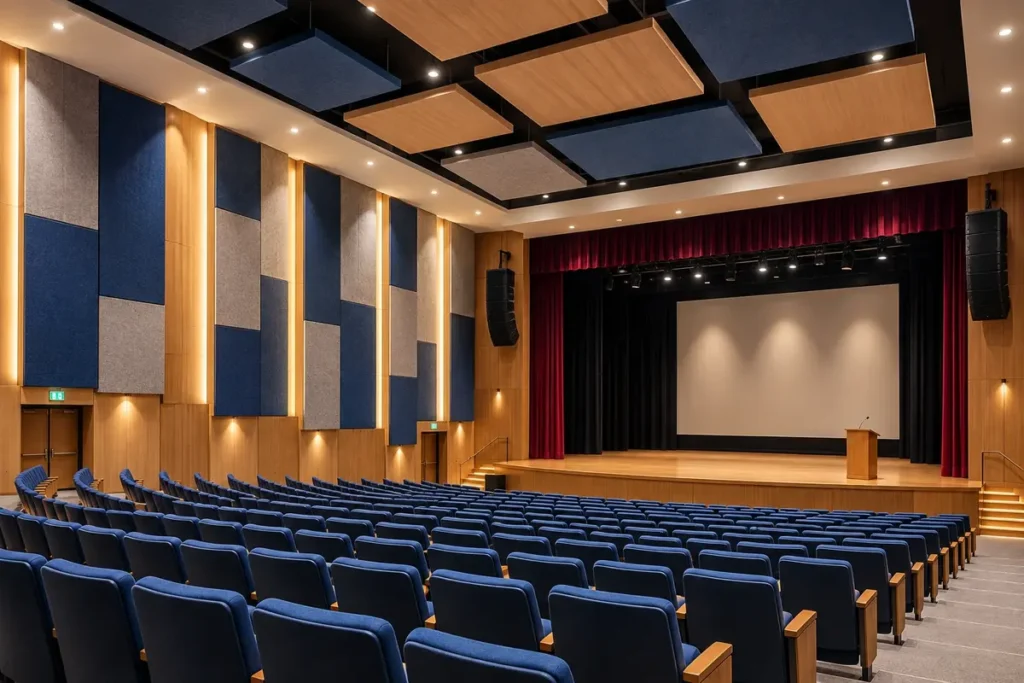
Auditorium acoustic treatment is the process of installing absorptive and diffusive materials, such as fabric wrapped panels, PU foam panels, and perforated wood panels, on the walls and ceiling of a hall to reduce echo, control reverberation time, and improve speech intelligibility and music clarity. It is different from soundproofing, which stops sound from leaking in or out of a room through mass and sealing. Most halls that sound “boomy,” “echoey,” or “unclear” from the back rows need acoustic treatment, not soundproofing, and a proper diagnosis before buying material saves both cost and rework.
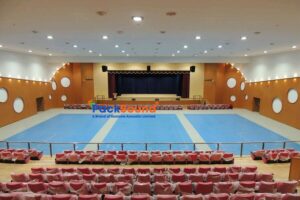
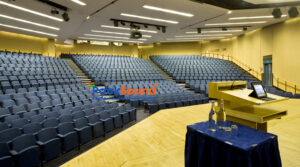
Large, mostly empty volumes with hard, parallel, reflective surfaces (concrete, glass, marble, plywood) reflect sound instead of absorbing it, so multiple reflections arrive at a listener’s ear at different times and blur the original signal.
Common triggers our site visits keep turning up, in order of frequency:
Acoustic treatment (absorption and diffusion) improves how sound behaves inside the room. Soundproofing (mass, sealing, decoupling) stops sound from crossing the wall to a neighbouring space. Most auditoriums need both, in different proportions.
| Goal | What It Solves | Typical Solution |
|---|---|---|
| Fix echo, clarity, reverberation inside the hall | Sound quality within the room | Auditorium acoustic panels, ceiling baffles, wall treatment |
| Stop sound leaking to corridors, classrooms, or the street | Sound transfer between spaces | Auditorium soundproofing with mass-loaded barriers, door and window seals, decoupled partitions |
| Both echo and leakage together | Full hall isolation and clarity | Combined acoustic treatment plus soundproofing an auditorium as one integrated plan. |
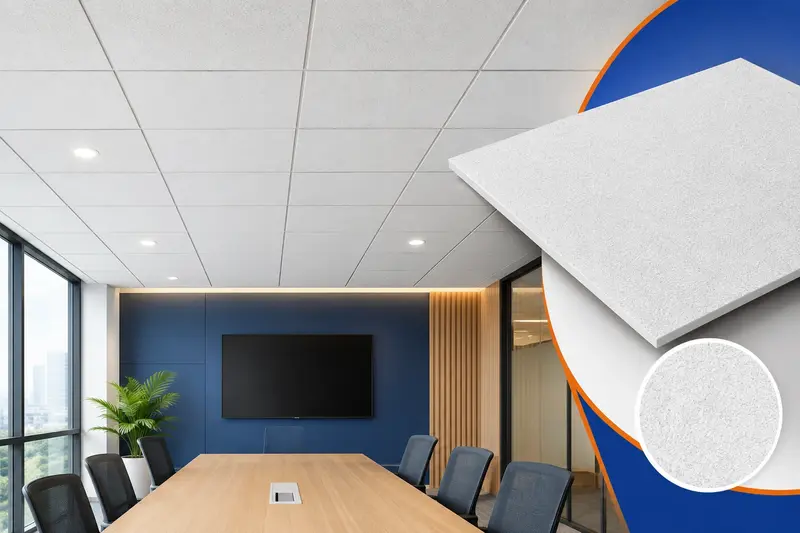
Lightweight acoustic ceiling tile with high NRC for auditoriums, reducing echo and reverberation.
Browse Now
Premium wall panel wrapped in fabric to enhance sound absorption and clarity in large spaces.
Browse Now
Designer 3D wall panels combining aesthetics and superior acoustic performance.
Browse Now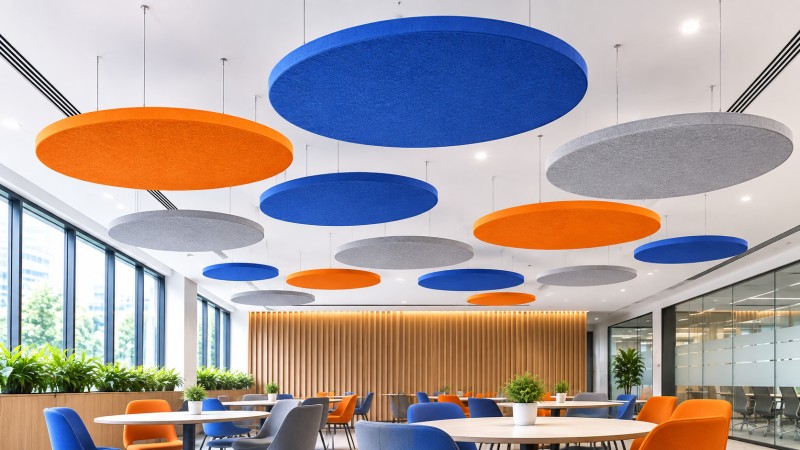
Suspended ceiling clouds to absorb sound and enhance visual design in auditoriums.
Browse Now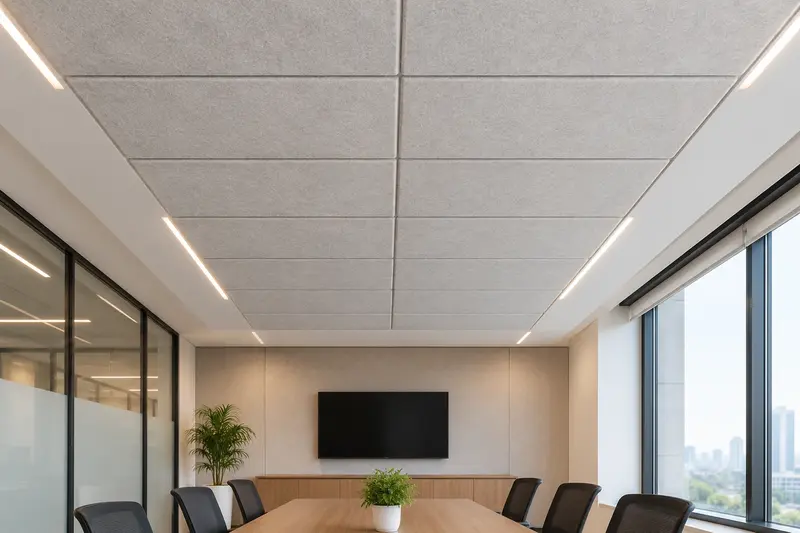
High NRC ceiling panels with micro-perforated design for excellent sound absorption.
Browse Now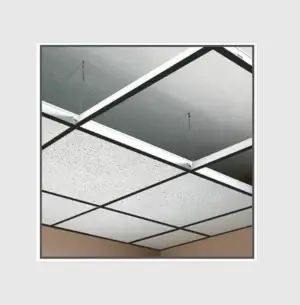
Moisture-resistant, lightweight ceiling tiles that control reverberation in large halls.
Browse Now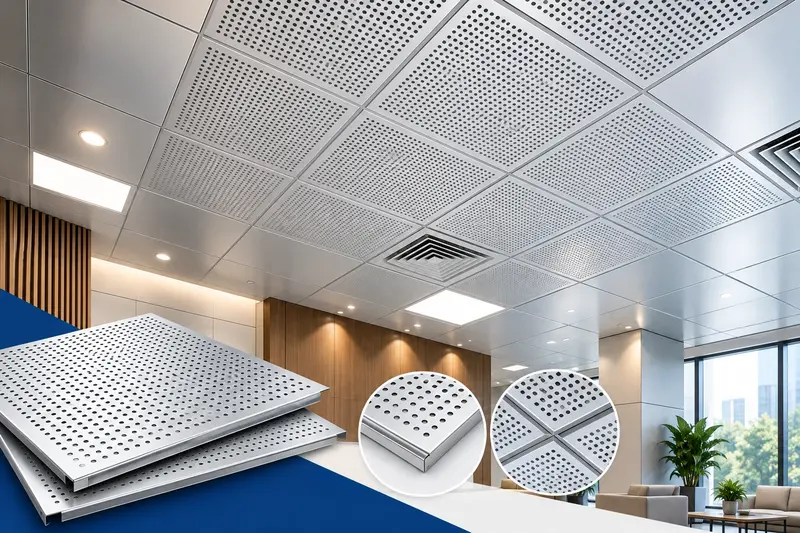
Durable metal acoustic ceiling panels combining aesthetics and high sound absorption.
Browse Now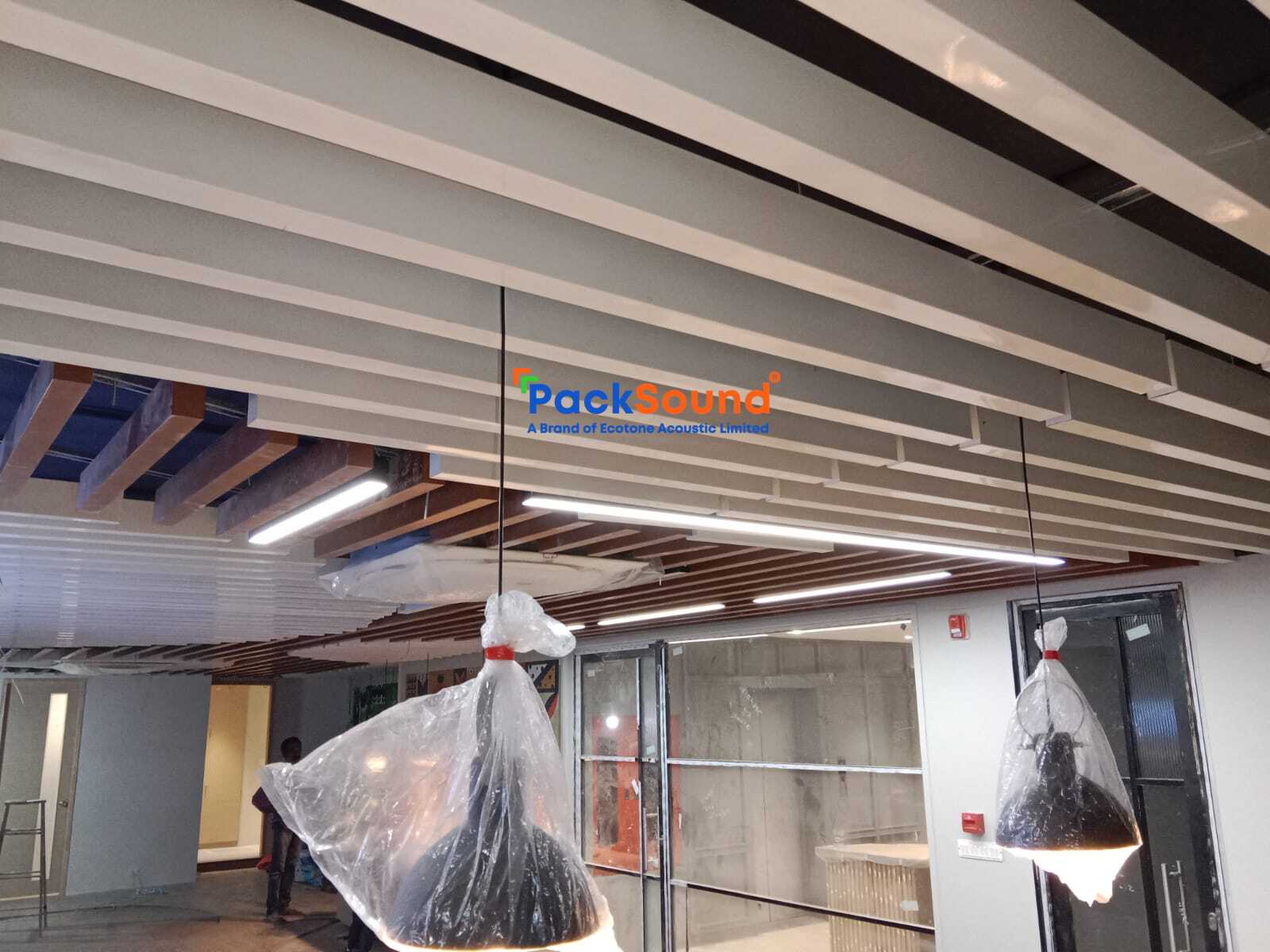
Vertical baffles to break up echo and reverberation in auditoriums with high ceilings.
Browse Now| Parameter | Typical Value |
|---|---|
| Panel thickness | 25mm to 50mm |
| Core material | Glass wool, rockwool, PET felt, or PU foam |
| Facing | Acoustic fabric, perforated veneer, or fabric wrap |
| NRC rating | 0.70 to 0.95 |
| Fire rating | Class B-s2, d0 or better (as tested) |
| Panel sizes | 600x600mm, 600x1200mm, 1200x2400mm, or custom |
| Mounting | Adhesive, Z-clip, or impaling clip on batten |
| Benefit | Result for the auditorium |
|---|---|
| Reduced echo and flutter | Clear, single-arrival speech instead of blurred repeats |
| Controlled reverberation time | Consistent sound quality from front row to back row |
| Better speech intelligibility | Fewer “please repeat” moments during lectures and speeches |
| Improved music and AV performance | Balanced tone without boominess or harshness |
| Lower background noise | Less strain on the PA system and the speaker’s voice |
| Aesthetic upgrade | Fabric and wood-finish panels double as interior design |
| Long-term durability | Fire-rated, dust-resistant cores that hold performance for years. |
| Space type | Why acoustic treatment applies |
|---|---|
| School and college auditoriums | Clear speech for assemblies, exams, and events |
| Corporate town-hall and conference auditoriums | Clean audio for hybrid and recorded meetings |
| Cinema and preview theatres | Accurate sound reproduction without room coloration |
| Convention and banquet halls | Multi-use rooms need flexible acoustic control |
| Religious and community halls | Even sound reach for large seated congregations |
| Courtrooms and government auditoriums | Speech clarity for recording and transcription |
| Multiplex and OTT screening rooms | Controlled reflections for mixing and playback checks |
| Step | What happens |
|---|---|
| 1Site acoustic survey | Reverberation time and echo points measured on site |
| 2Material and layout plan | Panel type, coverage percentage, and placement finalised |
| 3Surface preparation | Walls and ceiling cleaned, levelled, and battened if needed |
| 4Panel fabrication | Panels cut, wrapped, and fire-tested to project specification |
| 5Mounting and fixing | Panels fixed with adhesive, Z-clips, or impaling clips |
| 6Acoustic testing | Post-installation RT60 and clarity check against target |
| 7Handover and maintenance note | Cleaning and touch-up guidance shared with facility staff |
| Attribute | Detail |
|---|---|
| Product category | Auditorium acoustic panels and soundproofing products for auditorium |
| Core options | Glass wool, rockwool, PET felt, PU foam, wood wool |
| Density | 32 to 96 kg/m³ depending on core |
| Standard thickness | 25mm, 40mm, 50mm (custom on request) |
| NRC (Noise Reduction Coefficient) | 0.70 to 0.95 as per ASTM C423 test method |
| Fire performance | Class B-s2, d0 or equivalent, as per test report |
| Facing options | Acoustic fabric, micro-perforated veneer, PVC laminate |
| Standard panel sizes | 600x600mm, 600x1200mm, 1200x2400mm |
| Edge profile | Square, bevelled, or tapered |
| Mounting method | Adhesive, Z-clip, batten, or impaling clip |
| Warranty | As per project scope and material certification. |
Features :-
Mass-loaded vinyl with decoupled partitions works best for isolation; foam alone will not soundproof a hall.
No, treatment fixes echo inside the room; soundproofing stops sound leaving or entering the space.
Cost depends on hall size, material, and coverage; a site survey gives an accurate quote.
Yes, panels mount directly on existing walls and ceilings using clips or adhesive fixing.
Foam helps mid and high frequencies but needs bass traps and diffusers for full control.
An NRC of 0.80 or higher is considered strong performance for most auditorium applications.
Reputed panels carry Class B-s2, d0 or equivalent fire ratings; always ask for the test report.
No, ceilings help but wall reflections and rear-wall slap echo still need direct treatment.
A mid-size auditorium typically takes one to three weeks depending on coverage and access.
Only partially; true noise isolation needs soundproofing layers, not absorption panels alone.